
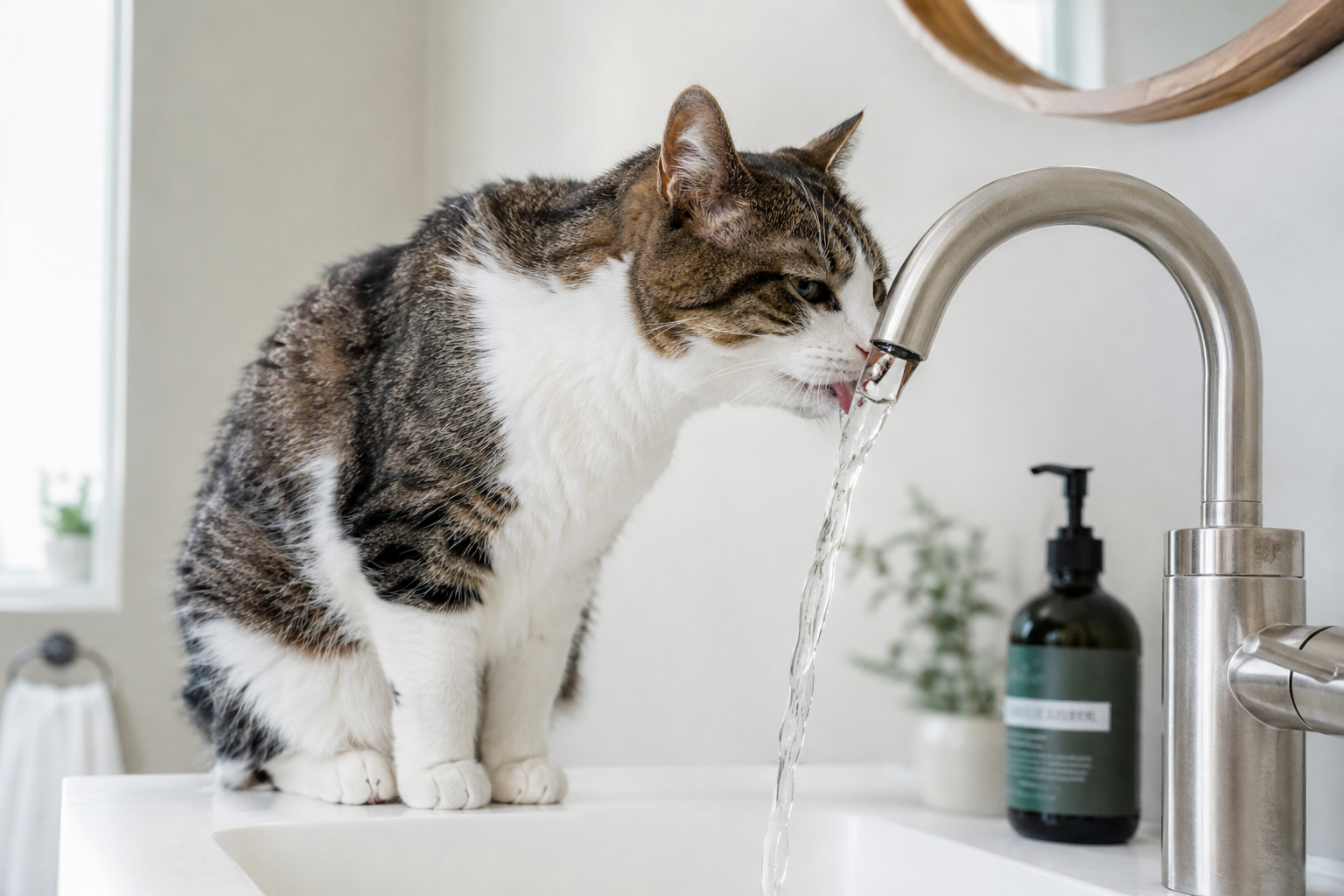
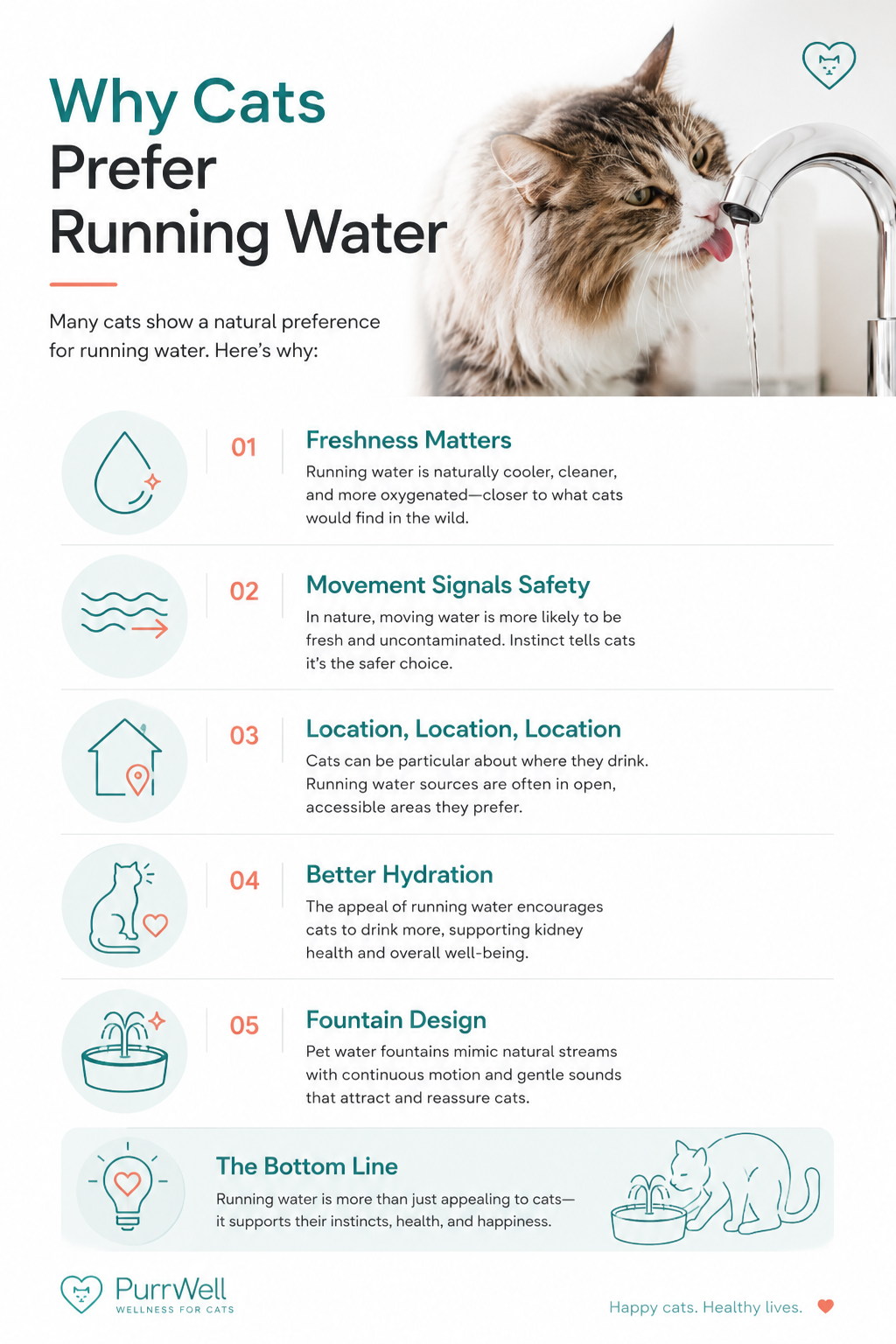
Moving water feels fresher
One of the biggest factors may simply be freshness. Still water collects dust, fur, food particles, and saliva surprisingly quickly. Cats are highly sensitive to smell and taste, so stale water may become unappealing faster than many owners realize.
Running water constantly changes and circulates, which may make it seem cleaner or more appealing. This is also one reason many cats suddenly start drinking more when switched to a fountain — not necessarily because of the movement itself, but because the water is cleaner and refreshed more consistently.
Cats often aren't obsessed with movement — they're obsessed with fresh. Movement just happens to be a reliable signal of freshness in nature.
Cats can be surprisingly sensitive to taste
Research shows that cats can detect water as a taste stimulus rather than simply a "neutral liquid." That means small differences can matter, including:
Some cats seem particularly sensitive to stale-tasting water or bowls that aren't cleaned frequently enough. Over months of fountain use, cleaning convenience often becomes more important than owners initially expect — a fountain that's hard to fully disassemble can gradually develop buildup inside pumps and hidden channels.
Movement gets their attention
Cats are naturally attracted to motion. A flat bowl of still water can be visually subtle, especially in dim lighting. Dripping faucets, flowing fountains, or rippling surfaces are easier to notice. Some behavior researchers believe moving water may simply be more stimulating and easier for cats to identify as a water source.
That said, studies haven't shown a universal fountain preference across all cats. Some cats clearly prefer flowing water, while others show no strong preference at all.
Bowl problems are more common than owners realize
In many households, the bowl itself is the real issue.
Bowl shape can matter
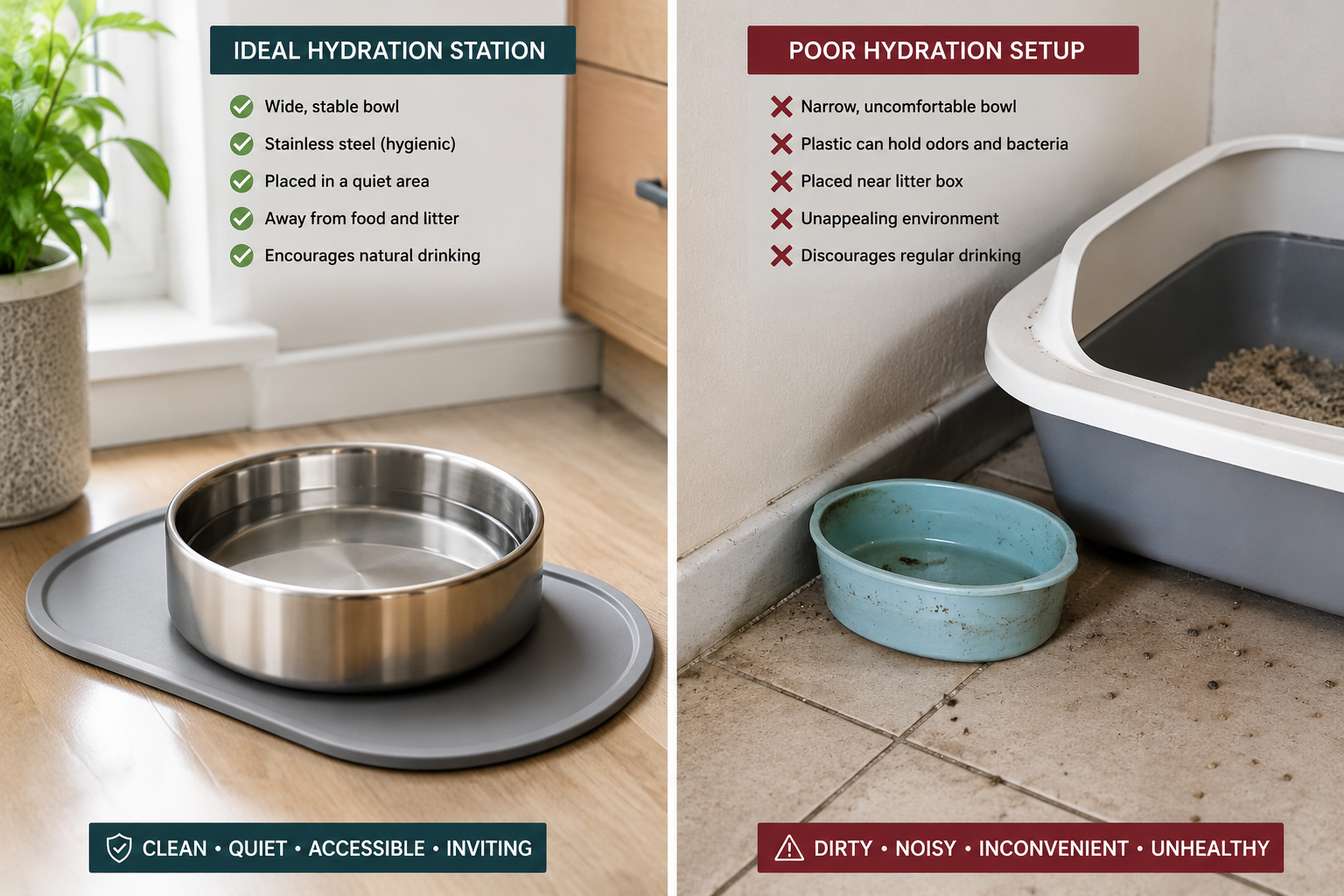
Many cats dislike deep or narrow bowls. Wide, shallow bowls are often easier and more comfortable to drink from. Some cats appear uncomfortable when their whiskers constantly touch the bowl edges. The idea of "whisker fatigue" is somewhat overused online, and the research isn't completely definitive — but bowl geometry and drinking comfort still seem to matter for many individual cats.
Bowl placement matters too
One recurring issue in feline hydration guidance is poor water station placement. Cats often avoid bowls that are:
- Next to litter boxes
- Beside noisy appliances
- In high-traffic hallways
- Directly beside food dishes
- In corners where they can't easily monitor the room
Interestingly, sinks and bathtubs often solve several of these problems at once — they may feel quieter, more open, elevated, or safer from other pets. In multi-cat homes, resource competition can also play a role: a cat avoiding the shared bowl may actually be avoiding another cat.
Why fountains help some cats
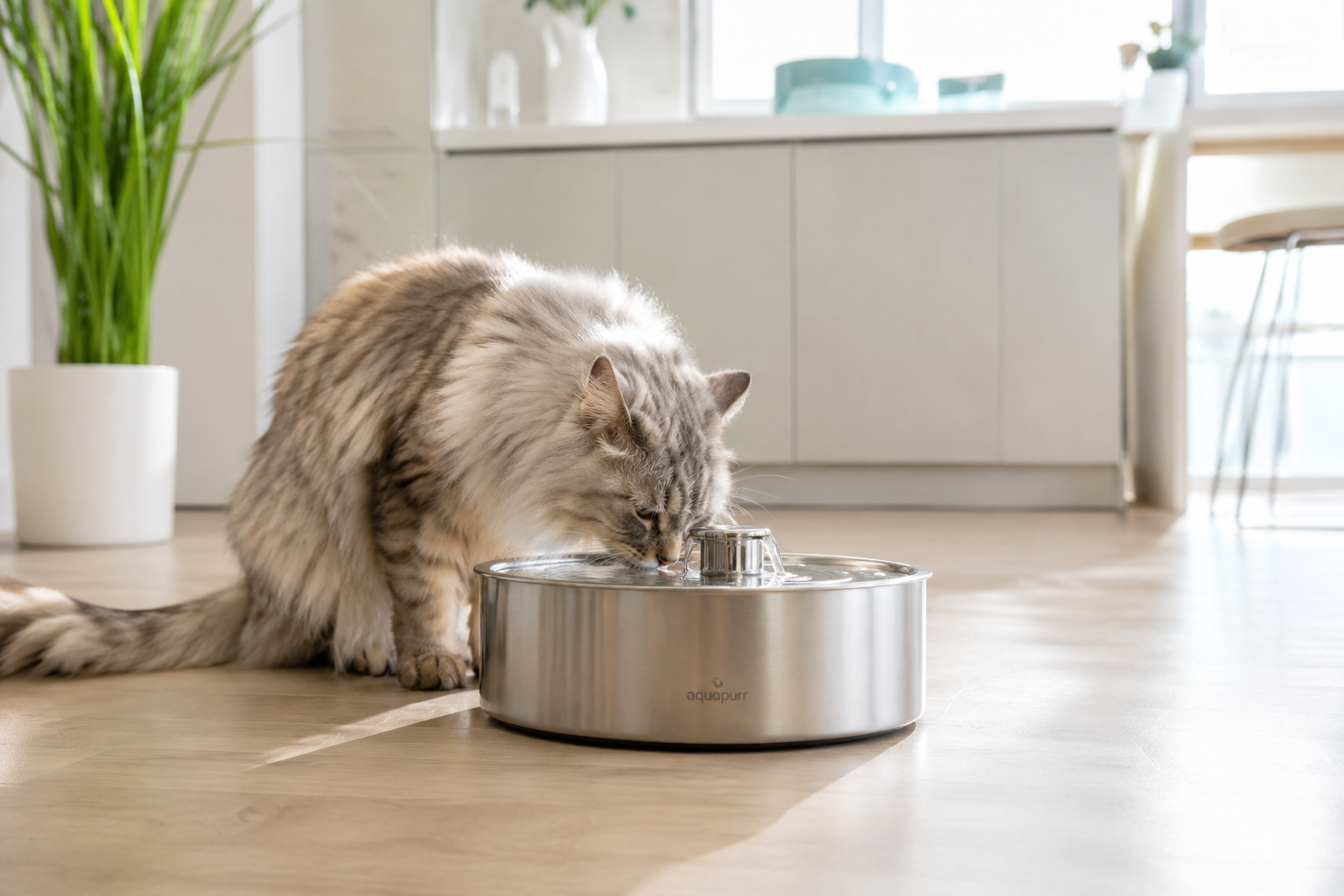
Cat fountains are best viewed as preference tools rather than guaranteed hydration solutions. Some cats drink noticeably more from fountains because they prefer:
Other cats ignore fountains entirely. Research comparing still water versus flowing water found strong individual preferences — but no consistent species-wide preference. That distinction matters because marketing around fountains often oversimplifies feline behavior.
For our hands-on testing of which fountains worked best, see The Best Cat Water Fountains of 2026.
Hydration matters more than fountain style
From a health perspective, total water intake matters far more than whether the water moves. Research consistently shows that increasing moisture intake improves hydration and urinary health more effectively than simply changing bowl type.
This is especially important for cats because they naturally have a relatively low thirst drive compared to many other animals. Wet food, added moisture in meals, and multiple water stations often have a bigger hydration impact than fountain upgrades alone.
When faucet drinking could signal a problem
Most faucet-drinking cats are simply showing a preference. However, increased interest in water can sometimes indicate an underlying medical issue, especially if the behavior is new or suddenly more intense.
Potential concerns include:
- Chronic kidney disease
- Diabetes
- Hyperthyroidism
- Feline lower urinary tract disease
Contact a veterinarian if your cat also shows symptoms like:
- Much larger litter clumps
- Weight loss
- Vomiting
- Lethargy
- Reduced appetite
- Straining to urinate
- Frequent litter box visits
Straining with little or no urine is considered an emergency in cats.
Common fountain mistakes
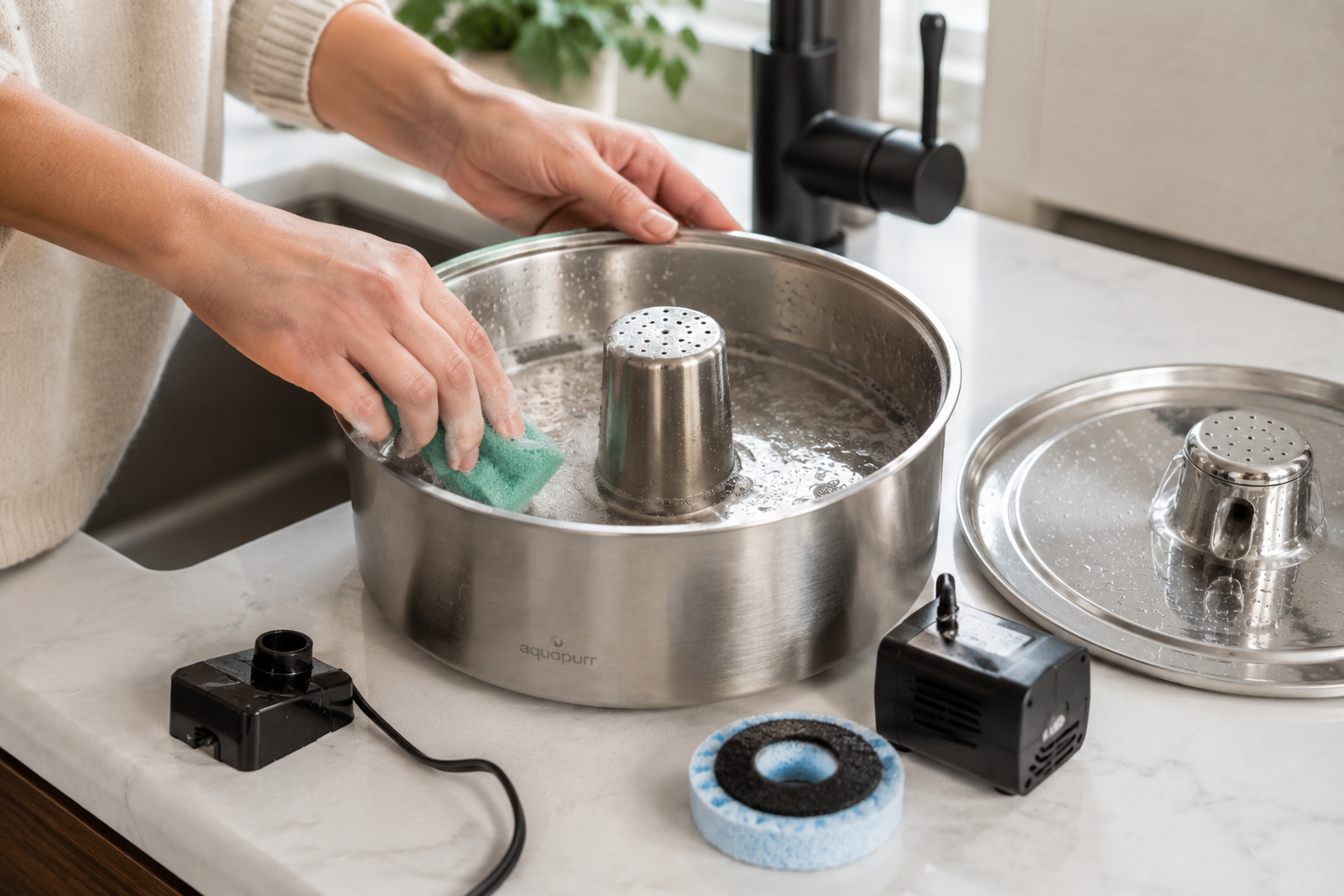
Over longer-term use, owners often notice issues like:
- Pump noise increasing
- Slime buildup inside hidden channels
- Dirty impellers
- Mineral scaling
- Filter replacement costs
- Plastic odor retention
Cleaning convenience becomes much more important after repeated maintenance cycles. One of the biggest differences between cheaper fountains and higher-quality models is usually how easy they are to fully disassemble and clean consistently.
Frequently asked questions
The questions cat owners ask us most about faucet drinking, fountains, and hydration.
Final thoughts
Cats that prefer running water are usually responding to a combination of freshness, comfort, movement, cleanliness, and environmental setup rather than one simple instinct. Some cats genuinely love fountains and faucets. Others are perfectly happy with still water when the bowl design and placement are improved.
The most important goal isn't forcing a specific drinking method — it's making hydration easy, safe, and appealing for your individual cat. If your cat is drinking normally, maintaining healthy litter habits, and otherwise acting well, a faucet preference is usually just part of their personality. But if thirst suddenly changes or becomes excessive, it's worth discussing with your veterinarian.
Have more questions about cat hydration and fountains? Browse our frequently asked questions or jump back to more articles in The PetReview Journal.