
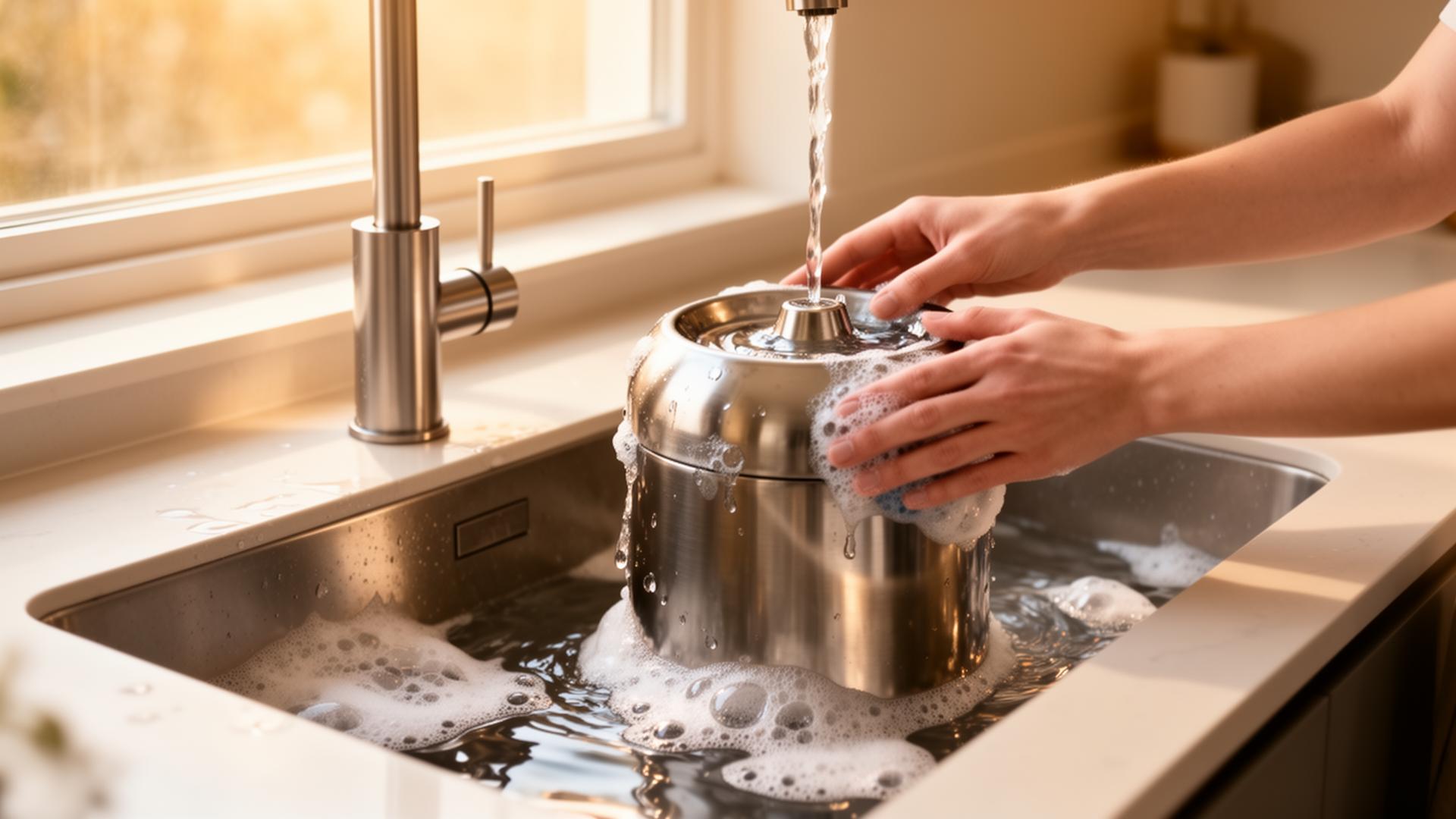
A cat water fountain can be one of the easiest ways to encourage better hydration, especially for cats that ignore stagnant bowls. The constant circulation, filtration, and movement tend to make water more appealing.
But fountains are not maintenance-free.
Without regular cleaning, a cat fountain can quickly develop slime, mineral buildup, trapped hair, bacteria, and unpleasant odors. Over time, poor maintenance can also shorten pump lifespan and make some cats avoid drinking altogether.
Quick cleaning schedule
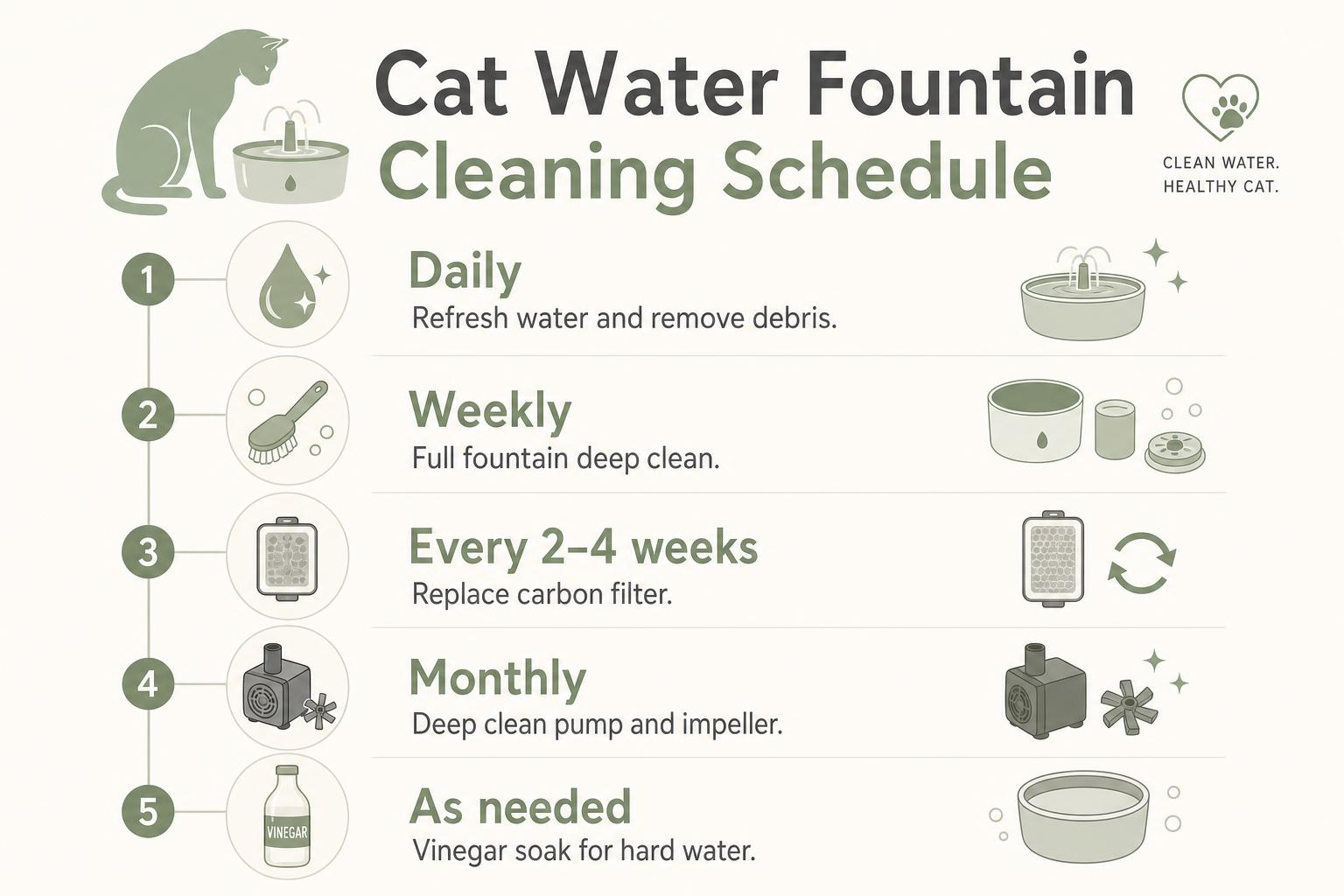
| Task | Recommended frequency |
|---|---|
| Replace or top off water | Daily |
| Remove hair and debris | Daily |
| Full fountain cleaning | Every 7 days |
| Replace carbon filters | Every 2–4 weeks |
| Deep-clean pump components | Monthly |
Some homes need more frequent cleaning, especially in multi-cat households or areas with hard water. During longer-term use, the biggest difference between well-maintained fountains and neglected ones is usually water freshness and pump performance.
Even premium fountains can become slimy surprisingly fast if cleaning gets delayed.
Why regular cat fountain cleaning matters
Cats are naturally sensitive to water quality. Many will stop drinking from a fountain if the water smells stale or if buildup becomes noticeable.
A dirty fountain can lead to:
- Biofilm or pink slime buildup
- Bacteria growth
- Mold inside filters
- Reduced pump flow
- Mineral deposits
- Unpleasant odors
- Shorter pump lifespan
Cleaning also directly affects how much maintenance the fountain requires over time. During testing-oriented evaluations of cat fountains, cleaning convenience often becomes more important after several weeks of ownership than it initially seems.
Some fountains are easy to rinse and reassemble. Others develop buildup inside narrow pump chambers and corners that take much longer to clean properly.
Signs your cat fountain needs cleaning
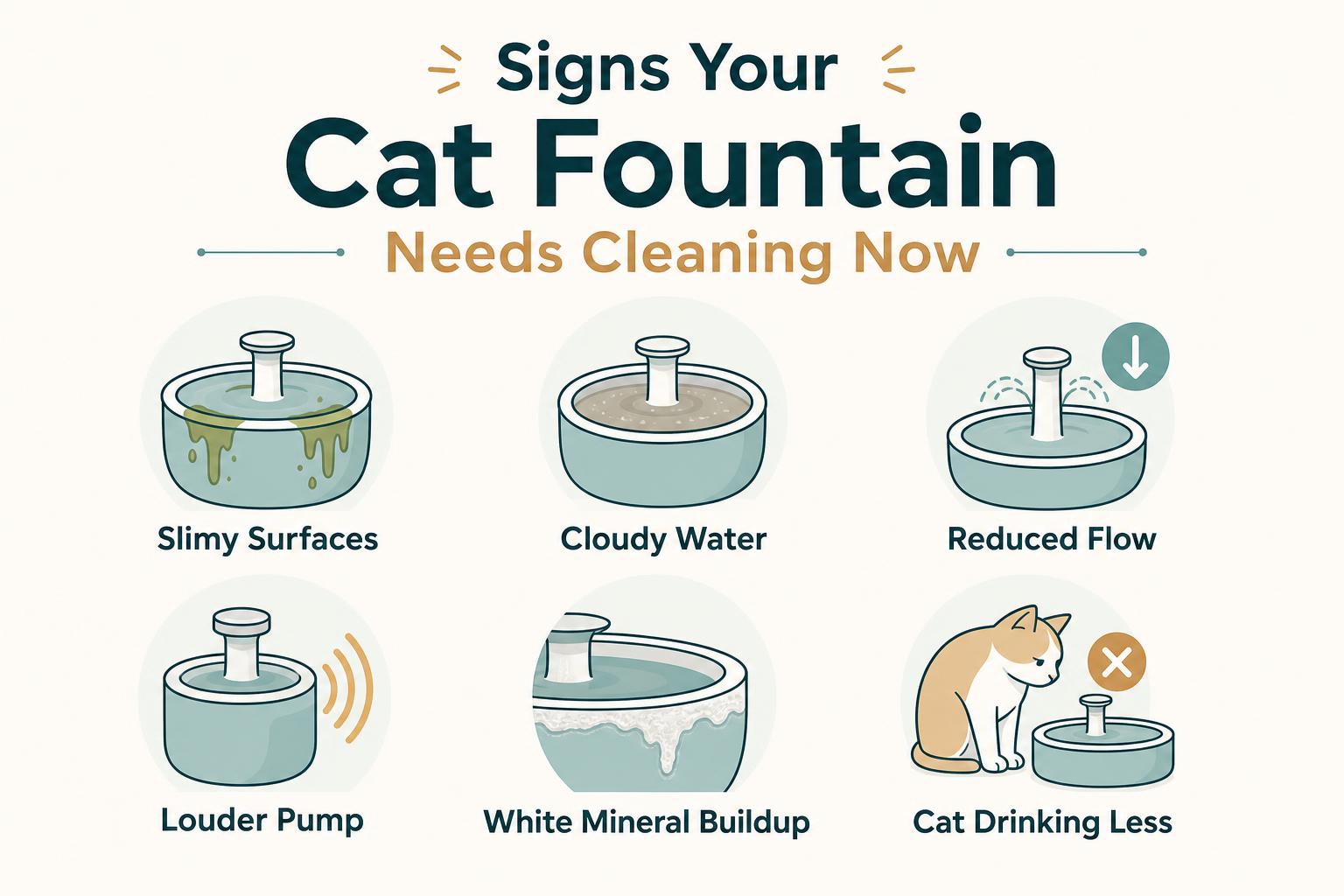
Even if you follow a weekly schedule, watch for signs the fountain needs attention sooner:
- Slimy surfaces inside the basin
- Cloudy water
- Reduced water flow
- Pump noise getting louder
- White mineral buildup
- Hair collecting near the pump
- Musty or sour smells
- Your cat drinking less often
One recurring issue with neglected fountains is hidden buildup inside the pump housing. Even fountains that appear clean externally can accumulate debris internally over time.
Daily cat fountain maintenance
Daily maintenance only takes a few minutes but makes a major difference in overall cleanliness.
1. Refill with fresh water
Top off or replace water daily whenever possible. Fresh water improves taste and oxygen levels while reducing bacteria growth. This matters especially in warmer months.
2. Remove hair and food debris
Cats often leave fur, kibble particles, dust, and litter around the fountain. A quick rinse or wipe-down prevents debris from circulating through the pump and filter system.
3. Check the water level
Most fountain pumps should remain fully submerged while operating.
Low water levels can cause:
- Excess pump noise
- Reduced circulation
- Premature motor wear
- Pump overheating
Noise levels often become noticeably worse when water levels drop too low.
Weekly cat fountain cleaning routine
For most single-cat households, a full cleaning every 7 days works well. Multi-cat homes may need cleaning every 3–5 days depending on usage.
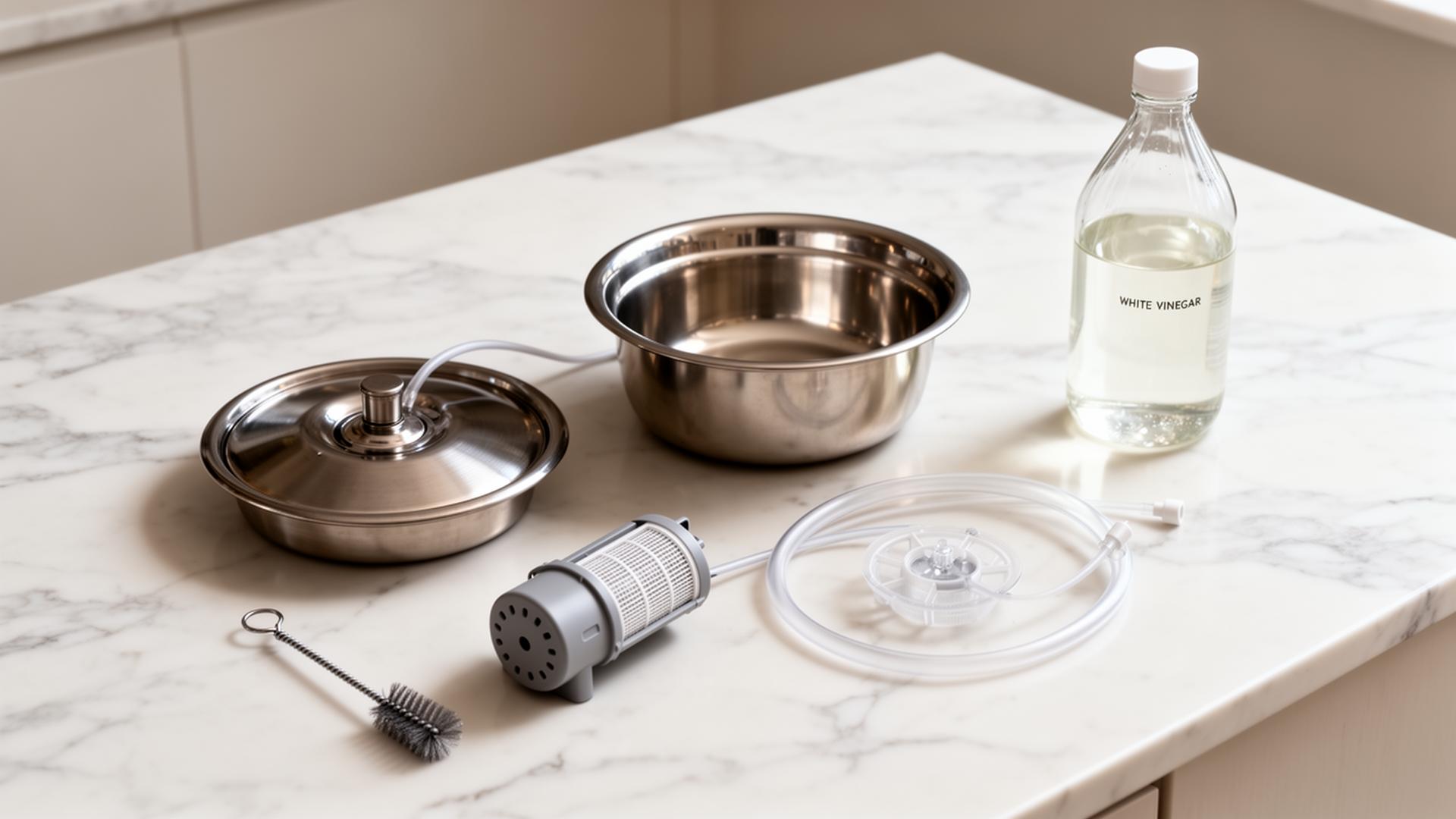
Step 1: Unplug and disassemble the fountain
Take apart:
- Water basin
- Lid or tower
- Pump
- Tubing
- Filter housing
- Spouts or attachments
The more thoroughly the fountain comes apart, the easier it usually is to clean properly.
Step 2: Wash all components
Use:
- Warm water
- Mild unscented dish soap
- Soft sponge or bottle brush
Pay close attention to:
- Corners
- Crevices
- Pump openings
- Water channels
- Undersides of lids
During repeated maintenance cycles, these hidden areas are usually where slime accumulates first.
Step 3: Clean the pump
Pump cleaning is often overlooked. Remove the pump cover and clean:
- The impeller
- Intake areas
- Internal chambers
- Any visible mineral buildup
A small toothbrush or detailing brush helps reach narrow spaces.
One of the most common reasons fountains become noisy over time is mineral buildup or trapped debris inside the pump.
Step 4: Rinse thoroughly
Soap residue can discourage cats from drinking. Rinse every component carefully until there's no remaining scent or residue.
Step 5: Reassemble and refill
Once fully dry or rinsed:
- Reinstall the filter
- Reassemble the fountain
- Add fresh water
- Restore power
The fountain should sound quiet and flow evenly after cleaning.
How often should you replace cat fountain filters?
Most carbon filters should be replaced every 2–4 weeks. Filter lifespan depends on:
- Number of cats
- Water quality
- Hair buildup
- Food debris
- Fountain size
Over longer-term use, old filters often become a hidden source of odor and reduced water quality.
If the filter appears slimy, discolored, clogged, or smelly, replace it immediately.
Hard water and mineral buildup
Hard water can dramatically increase cleaning frequency. Mineral deposits often appear as:
- White crusty residue
- Chalky buildup
- Brown staining near pumps
In hard-water areas, vinegar soaking becomes especially useful.
Vinegar cleaning method
A simple 1:1 solution of white vinegar and warm water can help dissolve scale buildup on:
- Stainless steel
- Plastic components
- Pump parts
After soaking, rinse thoroughly before reuse.
Stainless steel vs plastic fountains for cleaning
Material choice affects maintenance more than many buyers expect.
Stainless steel
Stainless steel fountains are often easier to maintain because they:
- Resist odors
- Resist scratches
- Reduce bacterial retention
- Clean more easily over time
They also tend to hold up better after repeated cleaning cycles.
Plastic
Plastic fountains can still work well, but scratches may trap bacteria over time. Lower-quality plastic also tends to:
- Discolor faster
- Absorb odors
- Show mineral buildup more visibly
If a plastic fountain develops deep scratches or persistent odors, replacement may eventually become necessary.
How multi-cat homes affect cleaning frequency
Homes with multiple cats usually need more frequent maintenance. More cats means:
- More fur
- More saliva
- Faster filter saturation
- Higher water turnover
- Increased debris accumulation
In many multi-cat setups, cleaning every 3–5 days is more realistic than once weekly.
Larger-capacity fountains can help reduce refill frequency, but they still require regular deep cleaning.
Can you put a cat fountain in the dishwasher?
Some fountains include dishwasher-safe components.
Usually safe: stainless steel trays, plastic basins, and lids.
Always hand-clean: pumps, filters, and any electrical components.
Always check manufacturer recommendations first — repeated dishwasher exposure can warp some plastics over time.
What happens if you don't clean a cat fountain?
Neglected fountains often develop:
- Biofilm
- Mold
- Algae
- Bacteria buildup
- Clogged pumps
- Reduced circulation
- Strong odors
Cats may also stop using the fountain entirely.
One recurring issue with poorly maintained fountains is that owners sometimes mistake reduced drinking for behavioral changes when the real issue is simply dirty water.
Worried your cat is drinking less than usual? Read our companion guide on why a cat may stop drinking water.
Tips to make cat fountain maintenance easier
Some fountains are significantly easier to maintain than others. Features that usually improve long-term usability include:
- Stainless steel construction
- Fewer small crevices
- Tool-free disassembly
- Dishwasher-safe parts
- Accessible pump housing
- Simple filter systems
Cleaning convenience becomes much more important after several months of ownership than many people expect during the buying process. Keeping a small cleaning brush specifically for fountain maintenance also helps speed up weekly cleaning routines.
Frequently asked questions
The questions cat owners ask us most about keeping a fountain clean, quiet, and cat-approved.
Final thoughts
So, how often should you clean a cat water fountain? For most homes:
- Daily water refreshes
- Weekly deep cleaning
- Monthly pump maintenance
- Filter changes every 2–4 weeks
...will keep the fountain clean, quiet, and safe.
A well-maintained fountain not only helps encourage hydration but also improves long-term reliability and reduces buildup that can shorten pump lifespan.
The biggest difference between fountains that stay pleasant to own and fountains that become frustrating usually comes down to maintenance consistency. A simple weekly routine is the easiest way to keep both the fountain and the cat happy.