
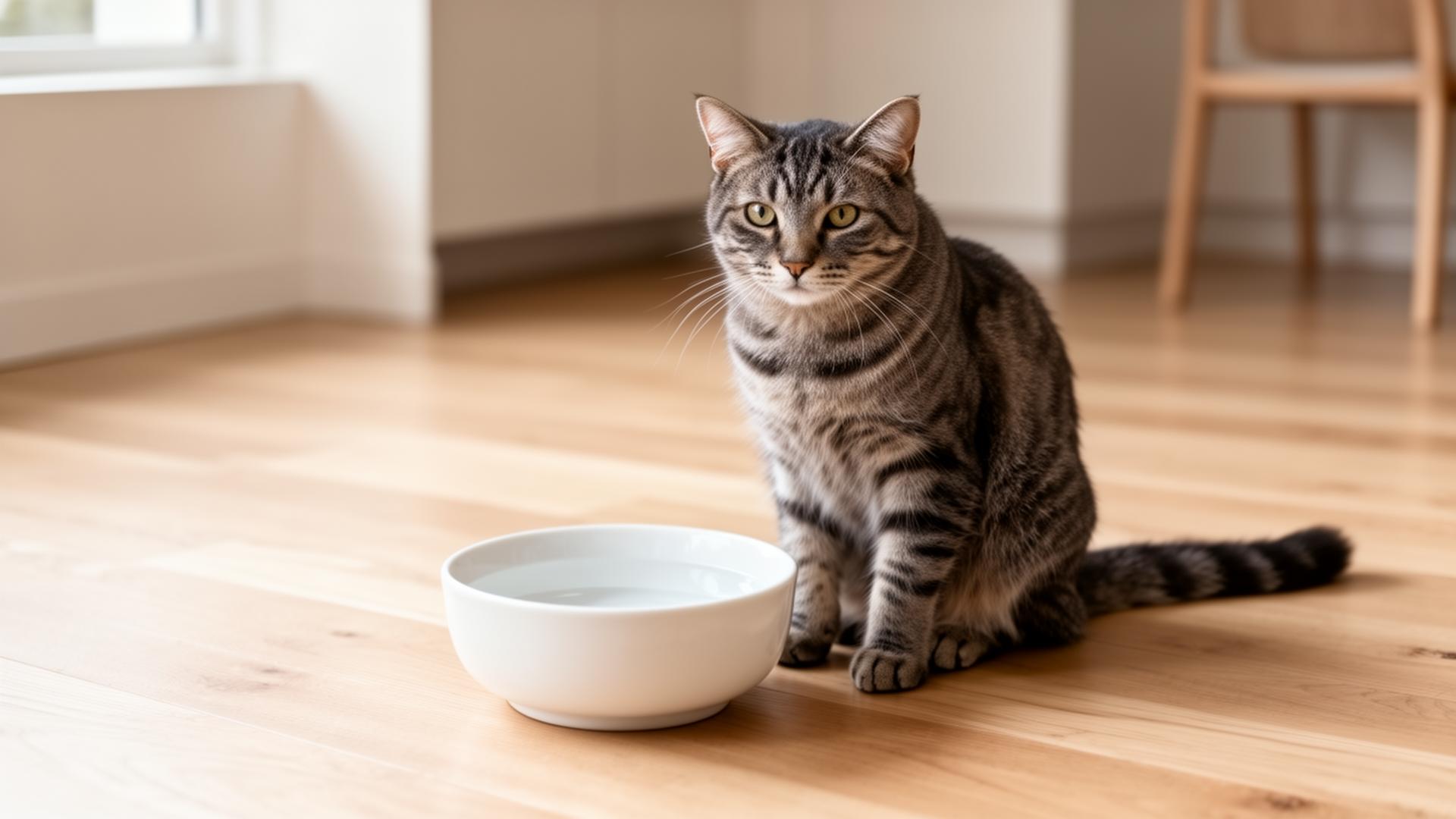
If your cat barely touches their water bowl, you're not alone. Many cat owners notice their cat drinking very little and immediately worry about dehydration or illness. In some cases, that concern is justified. But in many others, low water intake is partly connected to how cats naturally evolved.
Cats have a much lower thirst drive than dogs or humans. Their ancestors survived in dry climates by getting most of their hydration from prey rather than standing water. That instinct still affects modern house cats today.
At the same time, cats can become dehydrated surprisingly quickly, especially if they eat mostly dry food or develop an underlying health issue. Understanding the difference between "normal low drinking" and a genuine hydration problem is one of the most important parts of long-term cat care.
How much water should a cat drink?
Most healthy cats need roughly 40–60 mL of water per kilogram of body weight daily. For an average 4 kg (9-pound) cat, that usually works out to around 200–240 mL per day.
However, that number includes moisture from food.
This is where many owners get confused. A cat eating canned or wet food may drink very little from a bowl because wet food already contains significant moisture. Dry kibble, on the other hand, contains very little water, so cats eating dry diets typically need to drink more separately.
During long-term observation of feline hydration habits, one recurring pattern is that cats on wet-food diets often appear to "ignore" their water bowls while still maintaining normal hydration levels.
That said, low water intake should never be completely ignored. Even mild chronic dehydration can increase strain on the kidneys and urinary tract over time.
For a deeper breakdown by weight and diet, see our guide on how much water a cat should drink daily.
Why cats naturally drink less water
Domestic cats descended from desert-adapted wildcats that survived by extracting moisture from prey animals. Because of this evolutionary background, cats are biologically designed to conserve water efficiently.
Unlike dogs, cats rarely experience strong thirst signals until they are already somewhat dehydrated.
This explains why many cats:
- Take only small sips throughout the day
- Prefer moisture-rich food
- Show little interest in standing water
- Often seem 'picky' about water freshness
Unfortunately, modern indoor diets don't always match those instincts. Dry food contains far less moisture than a natural prey-based diet, which means many indoor cats rely heavily on drinking water even though their instincts may not encourage enough intake.
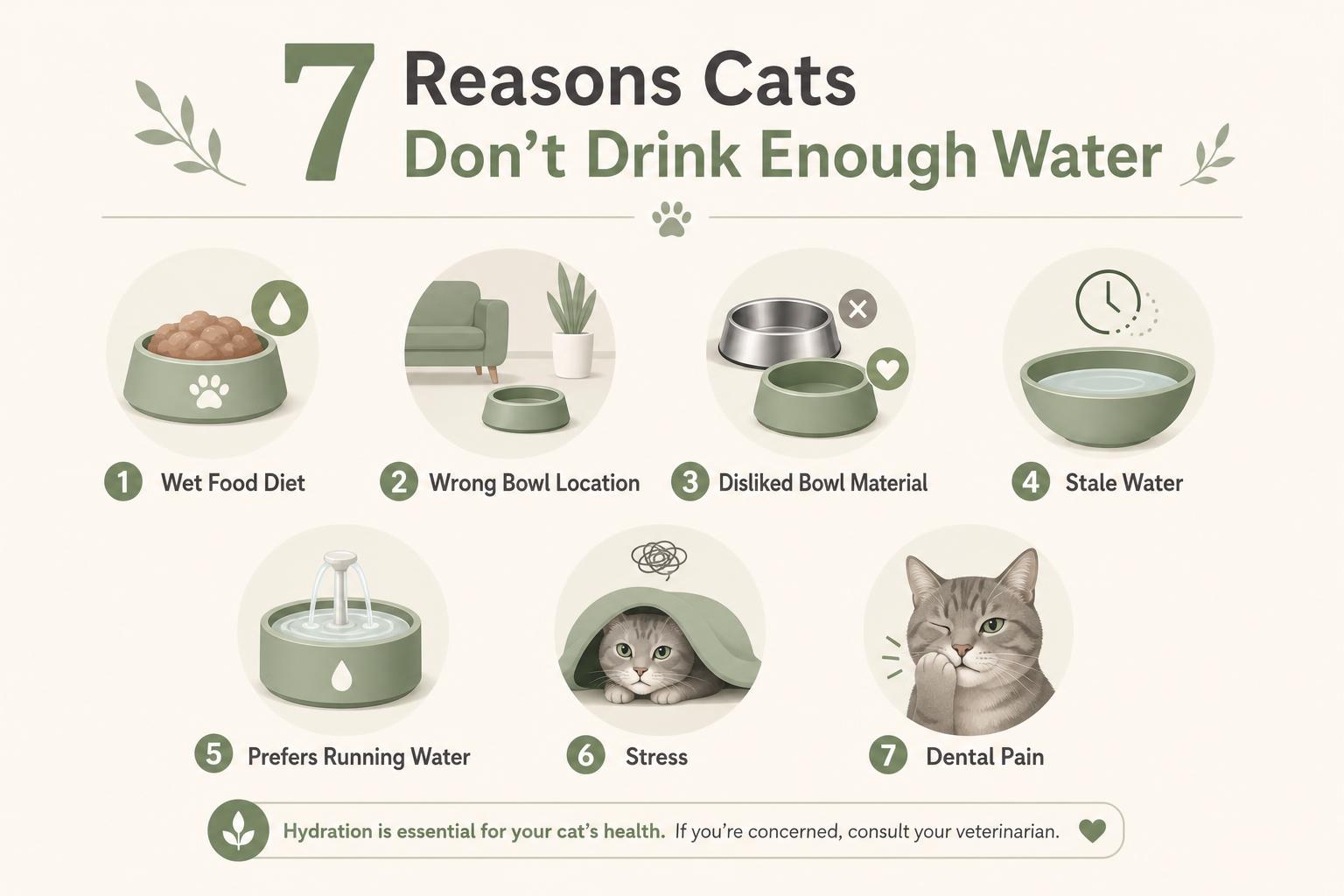
Common reasons your cat won't drink water
1. Your cat eats mostly wet food
Cats eating canned, raw, or moisture-rich food usually drink less separately because they already receive hydration from meals. Wet food can contain around 70–80% moisture, which significantly reduces reliance on a water bowl.
This is often completely normal.
However, it's still important to keep fresh water available at all times. Even cats on wet diets benefit from supplemental drinking, especially older cats or cats with kidney concerns.
2. The water bowl is in the wrong location
Many cats dislike drinking water near their food or litter box.
This behavior likely comes from instinct. In the wild, stagnant water near food sources could indicate contamination. Modern cats often retain similar preferences.
We noticed that cats tend to drink more consistently when water bowls are:
- Placed away from food dishes
- Located in quiet, low-traffic areas
- Easily accessible from favorite resting spots
- Available in multiple rooms
Multi-cat households especially benefit from several separate water stations.
3. Your cat dislikes the bowl itself
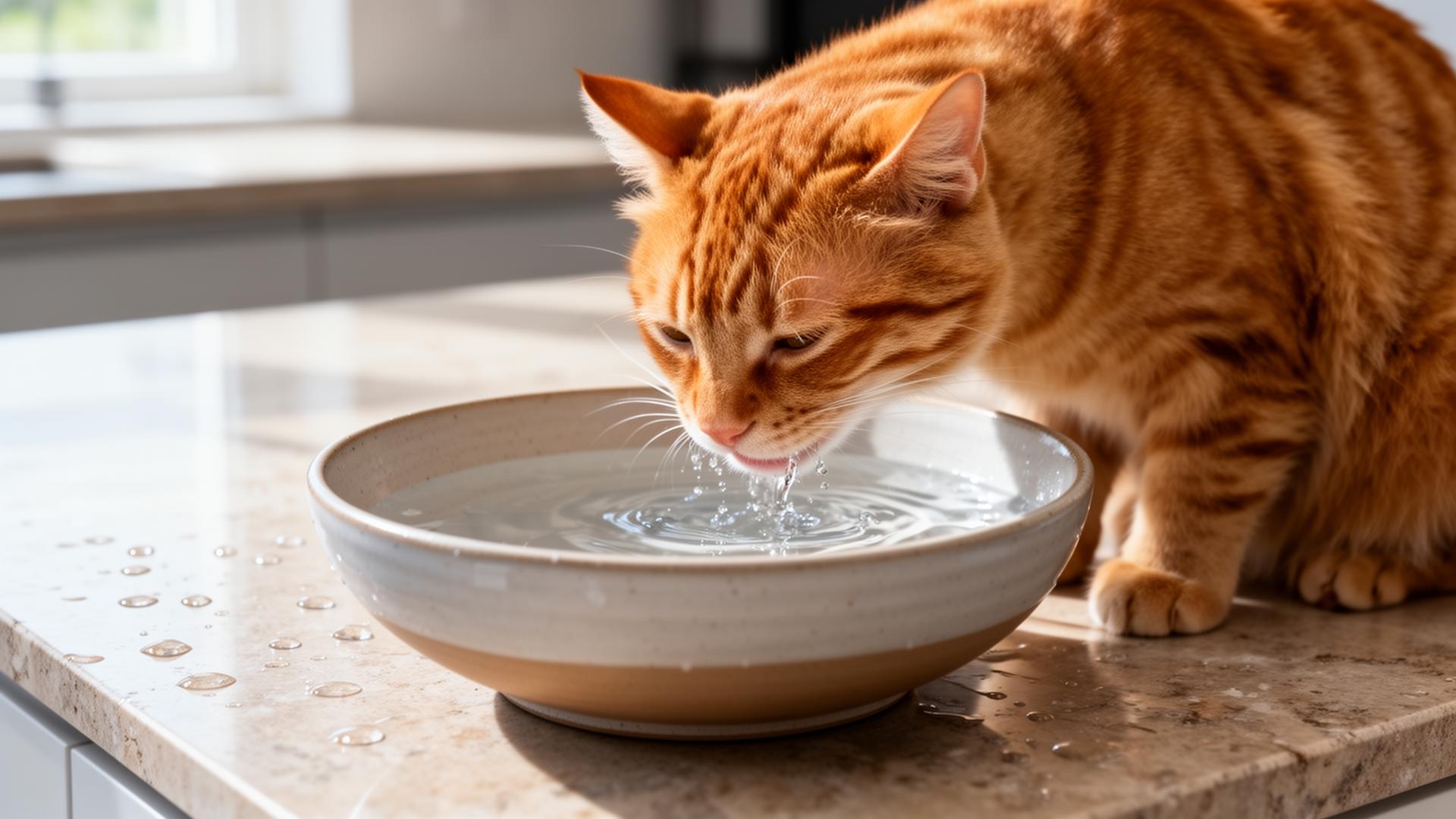
Some cats become surprisingly selective about bowl shape, depth, or material.
One of the most overlooked issues is whisker fatigue. Deep or narrow bowls can press against sensitive whiskers while drinking, causing discomfort over time.
Signs of bowl discomfort may include:
- Sniffing the bowl and walking away
- Pawing at water
- Drinking only from the edges
- Preferring sinks or faucets
Wide, shallow bowls usually work better for sensitive cats. Material matters too — plastic bowls can trap odors and bacteria over time, while stainless steel and ceramic bowls tend to stay fresher and easier to clean.
4. The water isn't fresh enough
Cats are highly sensitive to smell and taste.
Stale water, dust, food particles, slime buildup, or strong chlorine odors can reduce drinking interest significantly.
Cleaning convenience becomes especially important during long-term ownership because even minor buildup inside bowls or fountains can discourage drinking surprisingly quickly.
Fresh water should ideally be replaced daily, and bowls cleaned regularly with mild soap and a thorough rinse.
5. Your cat prefers running water
Many cats instinctively prefer moving water because it feels fresher and safer than stagnant water.
This is one reason some cats obsess over sinks, bathtubs, or dripping faucets.
Cat water fountains can sometimes help increase hydration because:
- Flowing water feels more appealing
- Filtration improves freshness
- Water movement attracts attention
- Oxygenation may improve taste
Some cats adapt to fountains immediately, while others need several days before consistently using them.
Related reading: why cats prefer running water and why your cat is obsessed with the sink.
6. Stress or environmental changes
Cats often reduce eating and drinking during stressful situations. Common triggers include:
- Moving homes
- New pets
- Loud visitors
- Renovations
- Schedule disruptions
- Conflict with other animals
A nervous cat may avoid shared areas entirely, including water stations.
Shy cats in multi-cat homes sometimes drink less simply because another cat guards access — even indirectly.
7. Dental pain or illness
If your cat suddenly stops drinking water, medical issues become much more important to consider. Drinking may become uncomfortable due to:
- Gingivitis
- Tooth fractures
- Mouth ulcers
- Stomatitis
- Oral infections
Cats are also extremely good at hiding illness. Sometimes reduced water intake is one of the earliest visible signs that something feels wrong.
Underlying conditions linked to dehydration may include:
- Kidney disease
- Diabetes
- Hyperthyroidism
- Gastrointestinal illness
- Fever or infection
If your cat's drinking habits change suddenly, especially alongside lethargy or appetite changes, veterinary evaluation is important.
Cat dehydration symptoms
Recognizing dehydration early can prevent much more serious complications later.
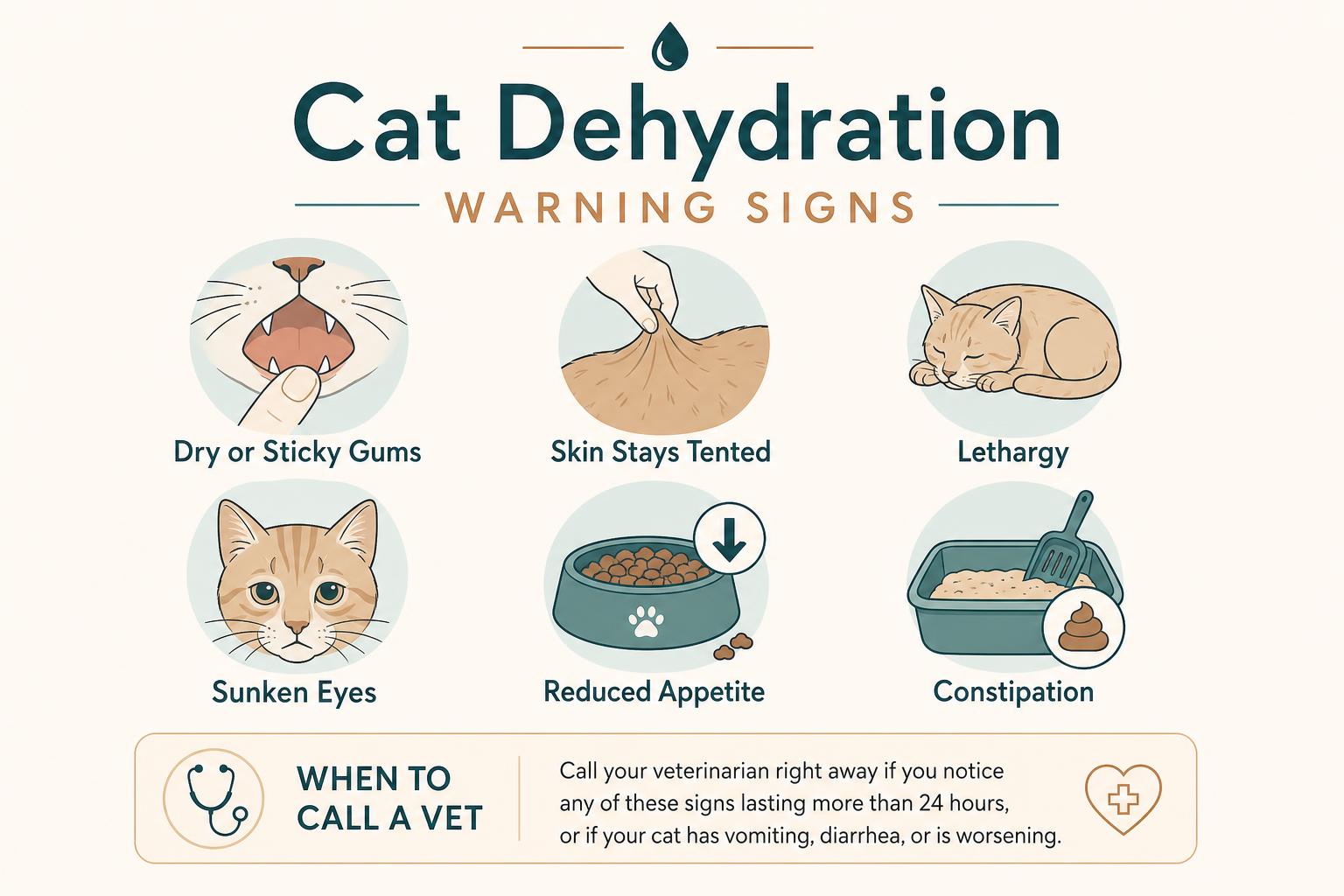
Dry or sticky gums
Healthy gums should feel moist and smooth. Dry or tacky gums are one of the clearest dehydration warning signs.
Poor skin elasticity
A classic hydration check involves gently lifting the skin between the shoulders. In a hydrated cat, the skin should snap back quickly. If it stays tented or returns slowly, dehydration may be present.
Older cats can naturally have reduced elasticity, so this test is not perfect on its own.
Lethargy
Dehydrated cats often become:
- Less active
- Sleepier than usual
- Less social
- More withdrawn
Low energy combined with reduced drinking should always be taken seriously.
Sunken eyes
Moderate to severe dehydration can cause the eyes to appear dull or slightly sunken.
Reduced appetite
Many dehydrated cats also eat less. Nausea, weakness, and dry mouth can all contribute.
Constipation
Low moisture levels frequently lead to dry, hard stools and straining in the litter box.
The bowl tells you almost nothing on its own. The gums, the skin, and the litter box tell you almost everything.
When should you worry?
Contact a veterinarian promptly if your cat:
- Has not drunk water for 24 hours
- Appears lethargic
- Has dry gums
- Stops eating
- Is vomiting or has diarrhea
- Shows rapid breathing or panting
- Suddenly changes drinking habits dramatically
Cats can deteriorate faster than many owners realize, especially senior cats or cats with underlying medical conditions.
How to encourage your cat to drink more water
Switch to (or add) wet food
One of the easiest ways to improve hydration is increasing dietary moisture. Even partial wet-food feeding can meaningfully improve total water intake. Some owners also mix additional water into wet food meals to increase moisture further.
Try a water fountain
Many cats consistently drink more from fountains than traditional bowls. During testing-oriented observation of hydration setups, one recurring difference between basic bowls and fountains is simply visibility and movement. Flowing water tends to attract more curiosity and repeated visits throughout the day. Stainless steel fountains are often preferred for long-term hygiene and odor resistance.
If you've already bought one and your cat is ignoring it, our guide on how to get a cat to use a water fountain walks through the exact introduction we use.
Use multiple water stations
Cats are more likely to drink when water is convenient and accessible. Try placing bowls:
- Near resting areas
- On different floors
- Away from litter boxes
- Away from noisy appliances
This becomes especially helpful in larger homes or multi-cat environments.
Change the water frequently
Freshness matters more than many owners expect. Cool, clean water replaced daily often increases interest noticeably. Some cats also prefer filtered water if tap water carries strong mineral or chlorine smells.
Choose better bowls
Wide, shallow ceramic or stainless steel bowls tend to work well for many cats because they:
- Reduce whisker discomfort
- Stay cleaner longer
- Resist odor buildup
- Feel more stable and secure
Keep bowls extremely clean
Biofilm buildup happens quickly, especially in warm environments. Even when bowls appear visually clean, cats may still detect residue or stale smells. Long-term maintenance consistency matters more than occasional deep cleaning.
If you've adjusted bowl, location, freshness, and diet and your cat still drinks far less than expected, treat it as a clinical signal — not a quirk. A quick vet check rules out the conditions that genuinely cause low intake.
Frequently asked questions
The questions cat owners ask us most when their cat suddenly seems to ignore the water bowl.
Final thoughts
A cat not drinking water is not always an emergency, but it should never be ignored completely. Many cats naturally drink less due to evolutionary instincts and moisture-rich diets. But dehydration can also signal environmental problems, stress, dental pain, or serious medical conditions.
The most effective approach is usually a combination of:
- Monitoring hydration habits
- Improving water accessibility
- Offering fresher, cleaner water
- Increasing dietary moisture
- Watching for dehydration symptoms early
Small changes in bowl placement, cleanliness, or water freshness can sometimes make a surprisingly large difference over time. If your cat suddenly stops drinking entirely or shows signs of dehydration, veterinary care should always be the next step.