
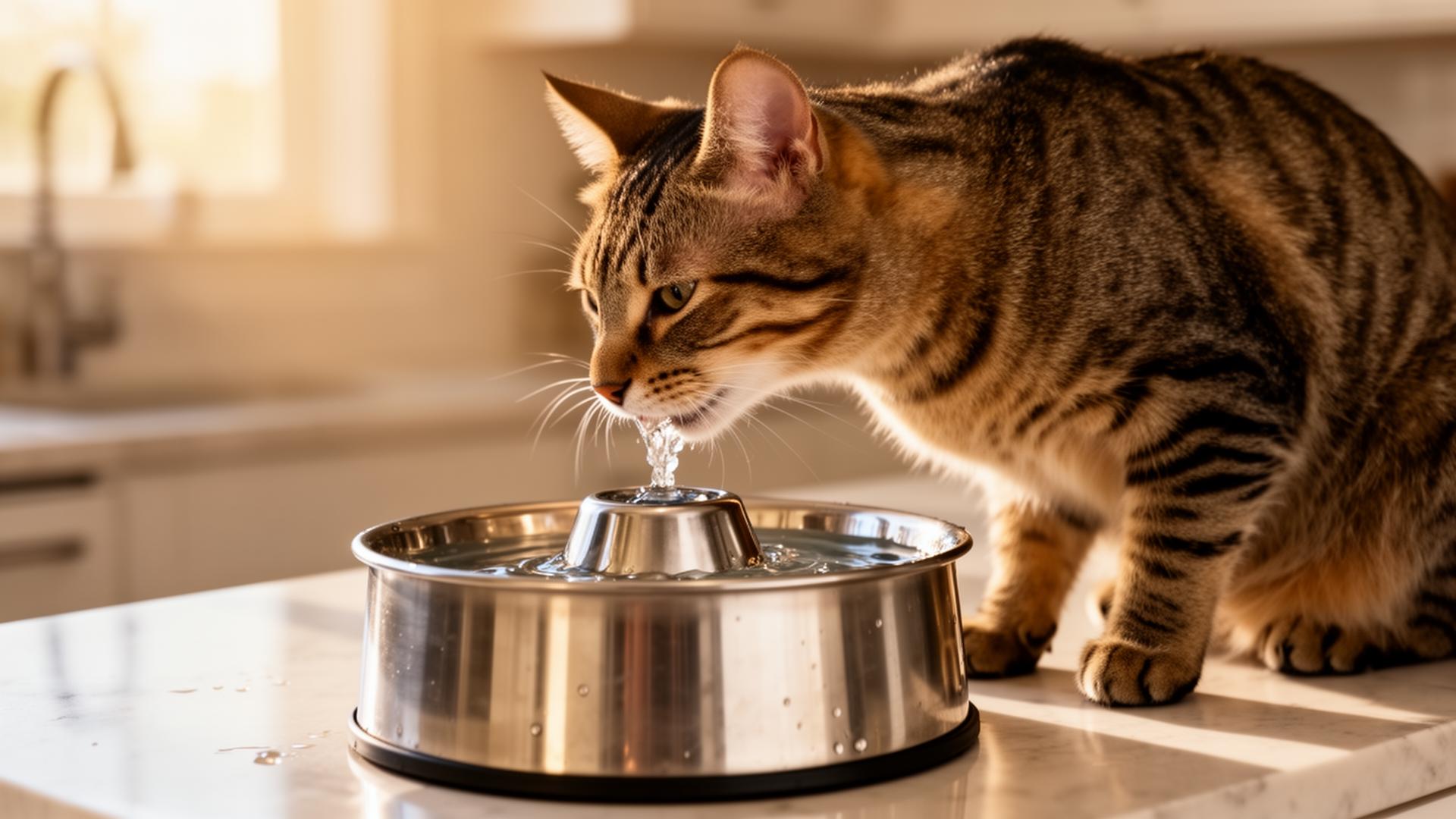
Cats are naturally low-thirst animals — a quirk of evolution that's surprisingly easy to overlook. In the wild, their ancestors got most of their moisture from prey, and many domestic cats still don't instinctively drink large amounts of water from a bowl.
That becomes a real problem in modern homes: indoor cats eat mostly dry food, live in climate-controlled rooms, and develop age-related conditions that quietly chip away at hydration. The good news is the daily target isn't a mystery, and the fixes are small.
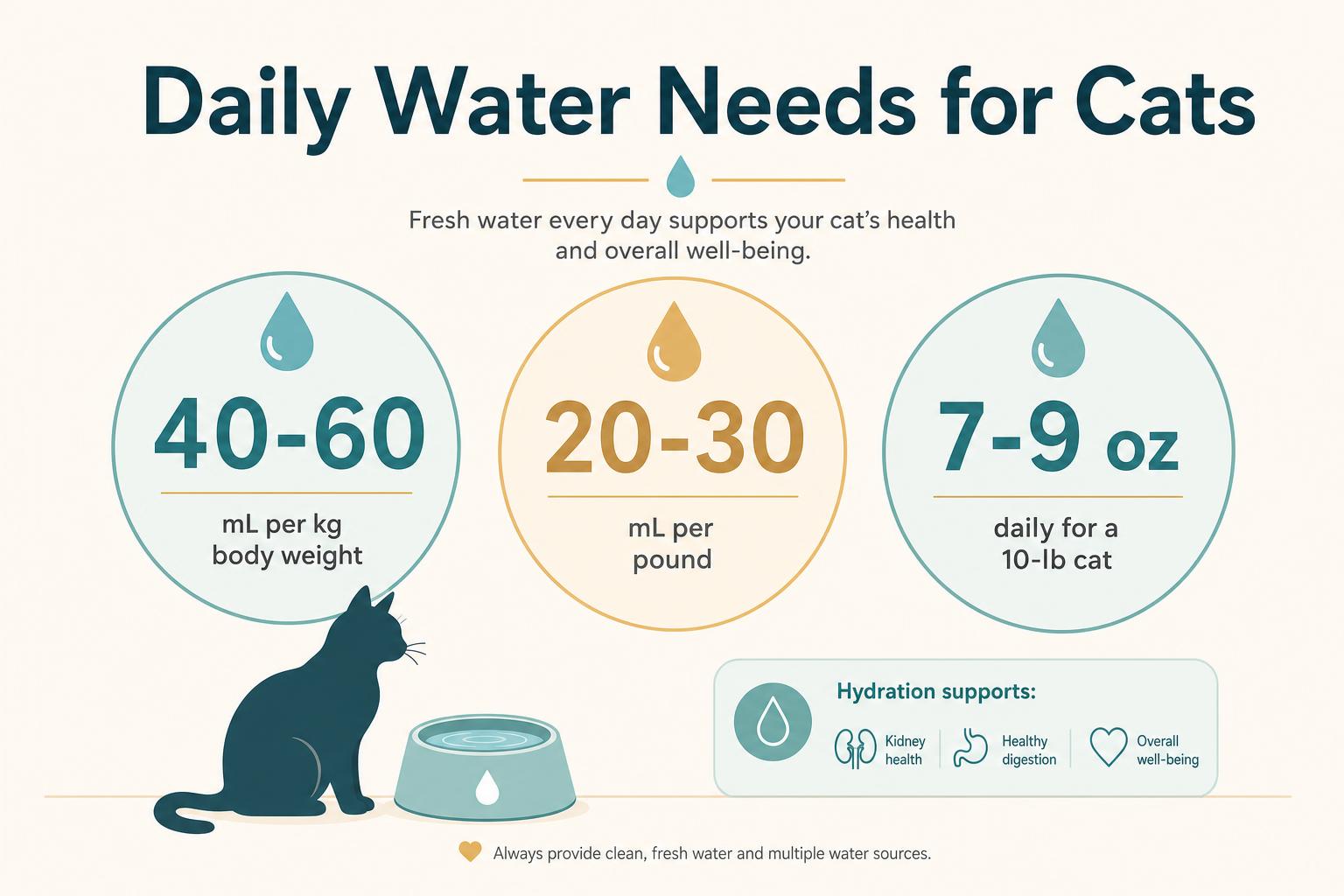
Quick answer: how much water does a cat need?
A healthy cat typically needs:
That total daily intake comes from three places:
- Water consumed directly from bowls or fountains
- Moisture from wet food
- Smaller amounts produced naturally during digestion
Cats eating wet food usually drink less, because canned diets already contain a lot of moisture. Cats eating mostly dry kibble usually need to drink more from their water source to make up the difference — and that's where many of them quietly fall short.
Why cat hydration matters
Hydration touches almost every major system in a cat's body. It supports:
Long-term low water intake tends to show up as concentrated urine, which can contribute to urinary discomfort and put extra strain on the kidneys over time.
One thing that comes up over and over in veterinary hydration research: cats often tolerate mild dehydration without showing obvious early symptoms. By the time something looks wrong, it's usually been brewing for a while. That's why prevention matters so much, especially for indoor cats and seniors.
How diet changes a cat's water intake
The single biggest lever you have over cat hydration isn't the bowl — it's the food.
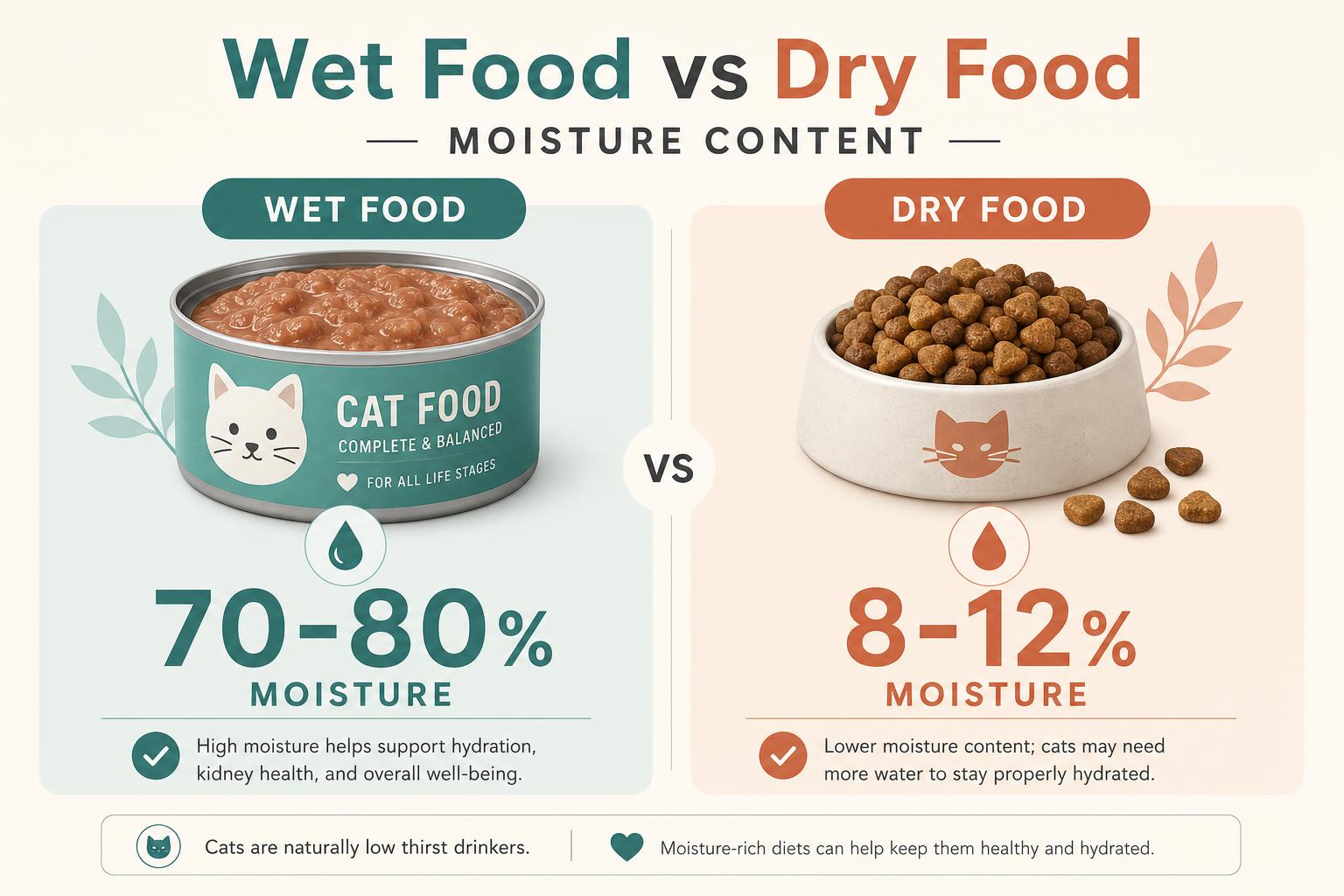
Cats eating wet food
Wet cat food typically contains around 70–80% moisture. That means cats eating canned food are getting a meaningful chunk of their daily hydration right through their meals. Some cats on high-moisture diets barely touch their water bowl — and that's not necessarily a problem.
This is one of the main reasons vets often steer cats with urinary or kidney issues toward wet food.
Cats eating dry food
Dry kibble usually contains only 8–12% moisture. Cats eating mostly kibble have to make up the difference at the water source — and many of them just don't. Over time, that pattern can show up as chronically concentrated urine, even in cats that look perfectly healthy on the outside.
Worth noting
You don't have to switch entirely to wet food to get the hydration benefit. Even replacing one daily meal with canned food, or adding a tablespoon of water to kibble, can move the needle.
Factors that affect how much water a cat should drink
Hydration needs aren't one-size-fits-all. A few things shift the target:
Body size
Larger cats need more water than smaller cats — hydration scales with body weight. A 14-pound Maine Coon will go through noticeably more water than a petite 7-pound cat.
Age
Kittens often have higher metabolic demands and may drink more relative to their size. Senior cats are the opposite kind of risk: as kidney function and thirst regulation change with age, they become more vulnerable to dehydration. Older cats with chronic conditions may also lose fluids faster than they replace them.
Activity level
Active cats, outdoor cats, and playful younger cats need more water — especially in warmer months. More movement means more fluid loss.
Climate and environment
Hot weather, dry indoor heating, and low humidity all increase fluid loss. Cats in hotter climates often benefit from multiple water stations spread around the home, not just one bowl in the kitchen.
Health conditions
Several medical conditions can dramatically affect water intake, including:
- Chronic kidney disease
- Diabetes mellitus
- Hyperthyroidism
- Gastrointestinal illness
- Fever or infection
Cats with kidney disease or diabetes often drink dramatically more than normal. The direction of the change matters less than the fact that it changed at all — sudden shifts in water intake (up or down) are worth paying attention to.
Dehydrated cat signs to watch for
Mild dehydration in cats is genuinely hard to spot early. Most of the warning signs are subtle, and a few of them overlap with normal aging.
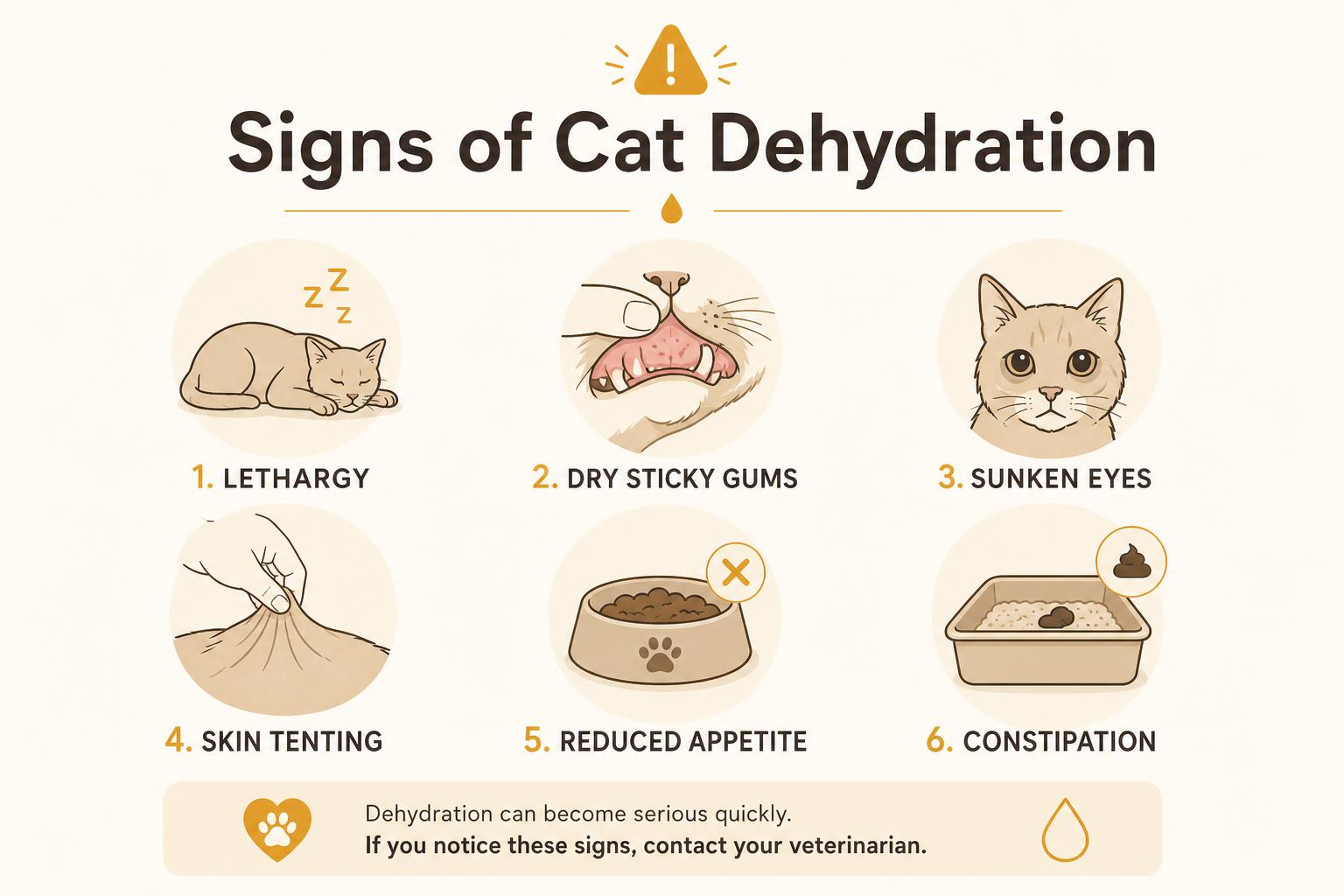
The most common ones to watch for:
- Lethargy
- Reduced appetite
- Dry or sticky gums
- Sunken-looking eyes
- Skin tenting
- Constipation
- Reduced grooming
- Increased sleeping
- Weakness
The skin-tent test
The simplest at-home check is skin elasticity. Gently lift the skin between your cat's shoulder blades and let go. In a well-hydrated cat, it snaps back almost instantly. If it stays tented or moves slowly back into place, dehydration may be part of the picture.
It's not a perfect test — older cats naturally lose some skin elasticity — but it's a useful gut check. Dry or tacky gums are another reliable signal. If you're seeing several signs at once, don't wait it out. Call your vet.
How veterinarians check cat hydration
Vets don't rely on one test — they put together a picture from a few different checks:
- Skin elasticity
- Gum moisture
- Heart rate
- Urine concentration
- Bloodwork
- Body weight trends
Urine specific gravity is one of the more useful measurements, because it tells you how concentrated the urine actually is. Highly concentrated urine often points to insufficient hydration, while unusually dilute urine can suggest something different — like early kidney disease or diabetes.
Bloodwork can fill in the rest, including kidney values and electrolyte balance.
Practical ways to increase cat hydration
Most cats need a little nudge. Here's what actually tends to move the needle:
1. Feed more wet food
The single most effective hydration change for most households. Even partial wet-food feeding noticeably bumps up daily moisture intake without asking your cat to change any habits.
2. Try a cat water fountain
A lot of cats prefer moving water — and during fountain testing, the difference between cats was striking. Some completely ignored bowls but drank consistently from circulating fountains. Fountains also tend to keep water fresher and cooler throughout the day. Stainless steel models usually beat plastic over the long run because they resist biofilm and odors better.
3. Add extra water to meals
Many cats tolerate a tablespoon or two of water mixed into wet food without protest. Low-sodium broth or the water from a can of tuna packed in plain water can also be persuasive.
4. Provide multiple water stations
Cats are surprisingly picky about where they'll drink. Bowls placed near litter boxes, noisy appliances, or busy hallways often get ignored. Multiple quiet locations — one per cat plus one extra is a common rule of thumb — usually improve consistency.
5. Keep the water fresh
A lot of cats won't touch water that's been sitting overnight. Daily refreshes, regular bowl scrubs, and watching out for slime buildup do more than people expect.
6. Experiment with bowl materials
Some cats have strong preferences for ceramic, stainless steel, or glass over plastic. Wide, shallow bowls also tend to win out because they don't press on whiskers — a small detail that's a deal-breaker for some cats.
The honest truth
You're not going to force a cat to drink. The whole game is making water more appealing — better location, better temperature, better container, better freshness — until they choose to drink more on their own.
Signs your cat may be drinking too much water
Low water intake is the more common worry, but excessive thirst is its own red flag. Watch for:
- Frequent trips to the water bowl
- Bowls emptying faster than usual
- Increased urination
- Weight loss
- Increased appetite
- Accidents outside the litter box
Cats drinking dramatically more than usual deserve a vet visit, especially if the change came on suddenly. It's one of the earliest visible signs of conditions like kidney disease, diabetes, and hyperthyroidism — and catching them early matters.
When to contact a veterinarian
Call your vet if your cat:
- Stops drinking entirely
- Refuses food
- Shows persistent lethargy
- Has vomiting or diarrhea
- Develops sunken eyes or pronounced skin tenting
- Suddenly drinks far more than normal
- Produces little or no urine
- Appears weak or disoriented
Don't wait it out
Hydration issues escalate quickly in senior cats and cats with kidney disease. When in doubt, call the vet — it's almost always cheaper and easier to address early.
Frequently asked questions
The questions cat owners ask us most about daily water intake, hydration, and what's normal.
Final thoughts
Most healthy cats need around 40–60 mL of water per kg of body weight per day — but hydration was never going to be a single number. Diet, age, climate, activity, and health conditions all push the target around.
For most households, the win isn't forcing a cat to drink. It's quietly building an environment that nudges them toward better water intake on their own — wet food, fresh bowls, multiple stations, the right container, and a fountain if it clicks.
Cats are very good at hiding discomfort. Small hydration improvements are one of the easiest preventive habits you can build before symptoms ever show up.
Want more? Read our companion guides on why cats prefer running water and why cats are obsessed with the sink, browse our full FAQ, or jump back to The PetReview Journal.