
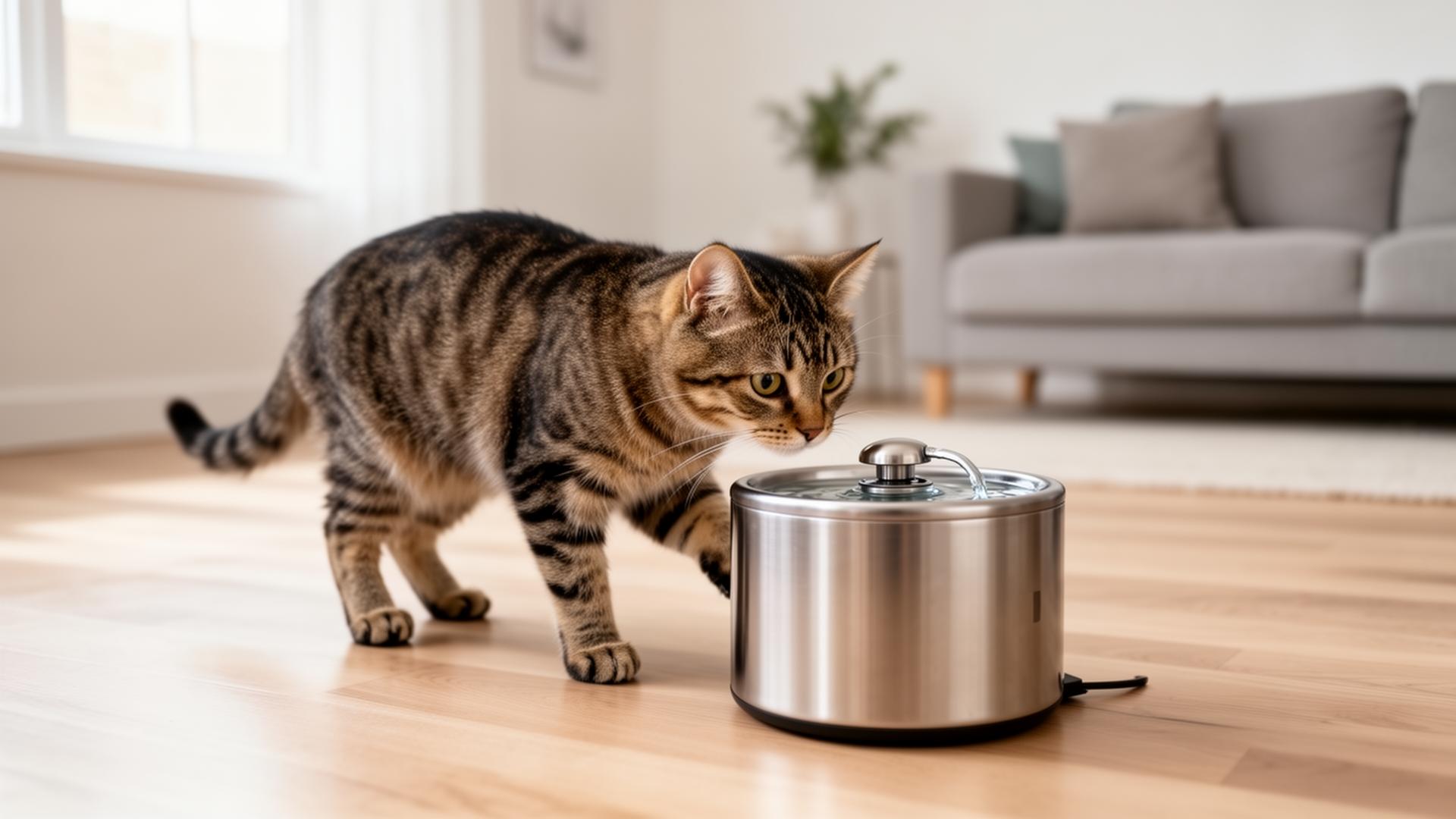
Some cats start drinking from a water fountain immediately. Others completely ignore it, stare at it from across the room, or act genuinely nervous around the moving water and pump noise.
If your cat won't use a fountain yet, that usually doesn't mean the fountain was a bad purchase. Cats are naturally cautious about changes in their environment, especially around food and water sources. In many cases, the issue is less about the fountain itself and more about how it was introduced, where it's placed, or how the water flows.
The good news is that most cats can learn to use a fountain with a gradual introduction and a few adjustments to the setup.
Why some cats avoid water fountains
Cats tend to prefer familiar routines. A new fountain changes several things at once:
- The appearance of the water source
- The sound of moving water
- The texture and movement of the water
- The location of the drinking area
- New smells from filters or packaging materials
For cautious cats, that combination can feel overwhelming at first.
Research and veterinary behavior experts also note that cats have highly individual water preferences. Some are naturally attracted to running water, while others strongly prefer still water from a bowl.
One recurring issue owners notice is that nervous cats often avoid fountains that are too loud, splashy, or placed in busy areas of the home.
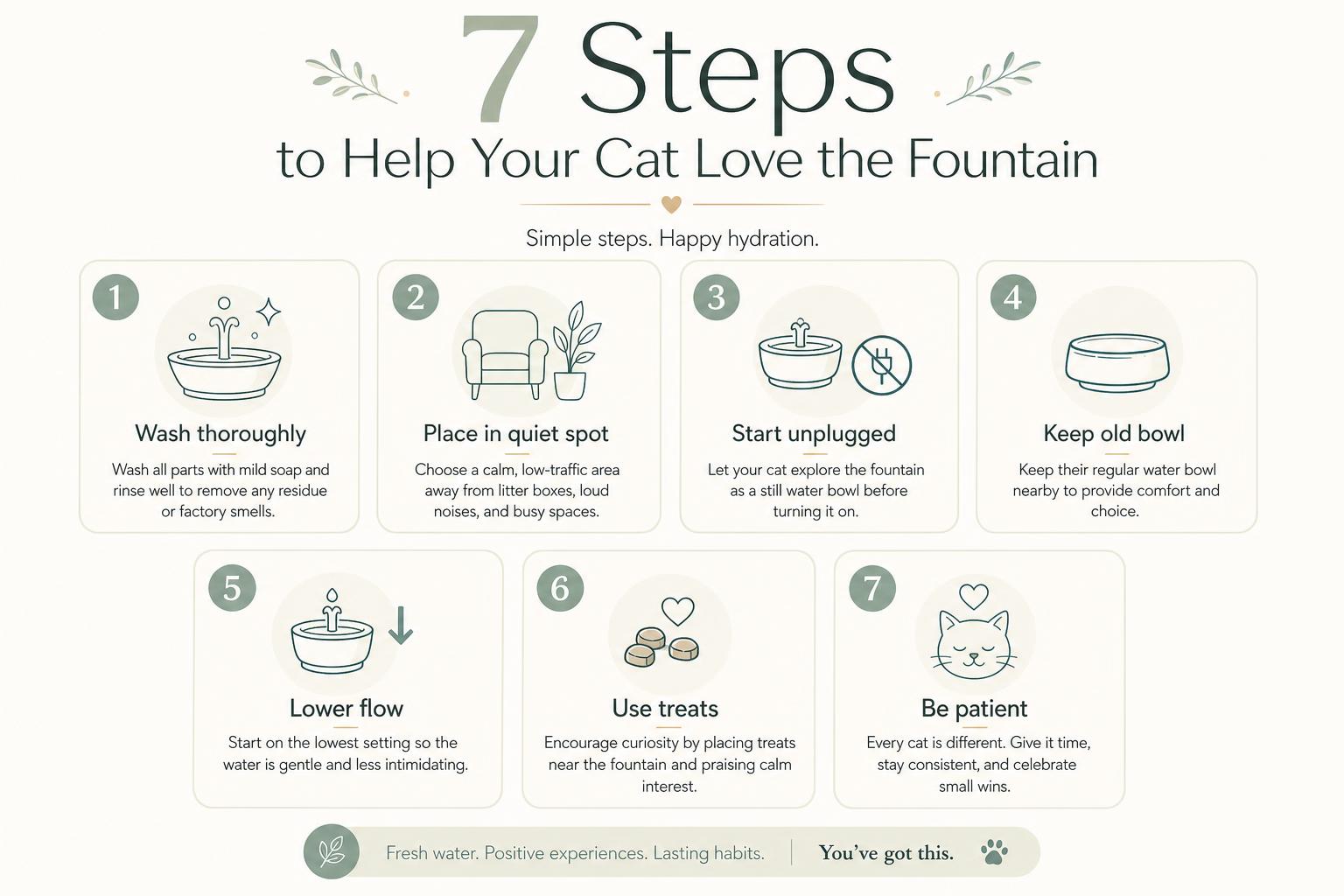
Start with the fountain turned off
One of the easiest ways to help a cat adjust is to introduce the fountain slowly.
Instead of plugging it in immediately, place the fountain in its intended location while it's turned off. This gives your cat time to investigate it as a harmless object before adding sound and movement.
During this stage
- Let your cat sniff the fountain freely
- Avoid carrying or placing the cat near it
- Reward curiosity with treats or praise
- Keep the environment calm and quiet
Many cats become noticeably more comfortable after a few days of simply seeing the fountain without active water flow. Behavior-focused cat care guides commonly recommend this gradual approach because sudden environmental changes can create avoidance behavior.
Keep the original water bowl available
A common mistake is removing the cat's regular water bowl too quickly.
If the fountain becomes the only available water source before the cat feels comfortable, some cats simply drink less overall. That can create unnecessary stress and hydration concerns.
A safer transition order:
- Leave the normal water bowl in place
- Set the fountain nearby
- Allow the cat to explore at their own pace
- Slowly transition over time if the fountain becomes preferred
Some cats eventually use both interchangeably, which is completely fine. The primary goal is healthy hydration, not forcing fountain use.
For more on healthy daily intake, see our guide on how much water a cat should drink daily.
Choose a quiet location
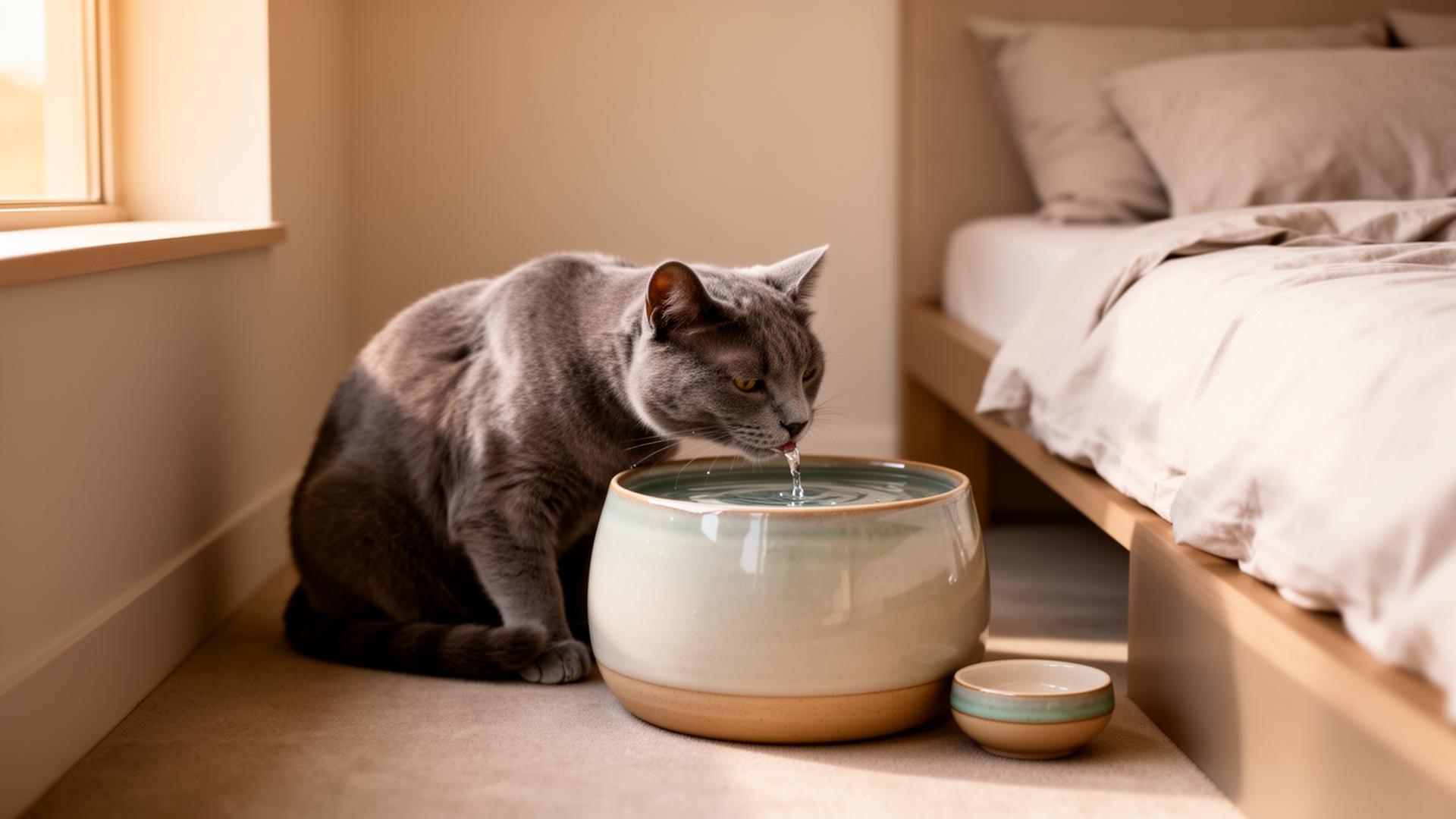
Placement matters more than many owners expect.
Cats generally prefer drinking in calm, low-traffic areas where they feel safe and undisturbed. A fountain placed near loud appliances, busy hallways, or active household areas may be ignored entirely.
Good fountain locations
- Quiet corners of living rooms
- Bedrooms
- Home offices
- Calm areas away from dogs or children
- Spaces with consistent lighting and minimal noise
Experts also recommend keeping water sources away from litter boxes and slightly separated from food dishes. Over the long term, many owners notice cats become more comfortable drinking when the fountain feels predictable and sheltered rather than exposed.
If your cat is scared of the fountain noise
One of the most common reasons a cat won't use a fountain is pump noise.
Cats have sensitive hearing, and some fountains produce humming, vibrating, trickling, or splashing sounds that nervous cats dislike.
If your cat seems hesitant
In our testing, quieter fountains consistently feel less intimidating for cautious cats, especially in smaller apartments or quiet homes.
Some cats also strongly prefer gentle bubbling water over waterfall-style streams. Others prefer the opposite. Flow style can matter more than many people expect.
If you can hear the pump from across the room, your cat hears it from across the house.
Wash the fountain thoroughly before use
New fountains sometimes carry plastic, packaging, or manufacturing odors that cats dislike immediately.
Before introducing the fountain
- Wash all removable parts thoroughly
- Rinse the filter according to instructions
- Run fresh water through the system
- Let the fountain air out for a few hours if needed
This step is especially important with plastic fountains, where mild chemical smells can linger initially. Stainless steel and ceramic fountains are often preferred long-term because they resist odors and buildup better over time.
Encourage curiosity with positive reinforcement
Cats usually respond better to encouragement than direct intervention.
Simple positive reinforcement techniques can help build confidence around the fountain:
- Place treats near the fountain
- Reward investigation and sniffing
- Use calm praise when the cat approaches
- Dip a finger into the water to create interest
- Add a small amount of tuna water or low-sodium broth temporarily
Even small interactions matter early on. If the cat touches the water, watches the stream, or drinks briefly, avoid interrupting the moment.
Avoid this common mistake
Hovering too closely or trying to physically position the cat near the fountain almost always increases hesitation instead of reducing it. Let curiosity do the work.
Try different water fountain styles
Not every fountain works for every cat.
Some cats dislike deep drinking areas. Others avoid narrow spaces because of whisker sensitivity. Certain cats dislike falling streams but enjoy shallow bubbling water.
If your cat ignores the fountain completely, it may simply be the wrong design.
Features that often help hesitant cats
- Wide, shallow drinking surfaces
- Gentle water movement
- Quiet pumps
- Stainless steel or ceramic materials
- Adjustable flow settings
- Low-profile designs
Cleaning convenience also becomes more important over longer-term ownership. If a fountain develops buildup quickly or becomes noisy between cleanings, some cats begin avoiding it entirely.
How long does it take a cat to adjust?
Adjustment times vary significantly.
Some cats use a fountain within minutes. Others take several days or even a few weeks before drinking consistently. In general, shy or older cats tend to adapt more slowly than confident or highly curious cats.
Patience usually matters more than repeated training attempts. One of the most helpful things owners can do is simply keep the experience low-pressure and predictable.
Signs your cat is becoming more comfortable
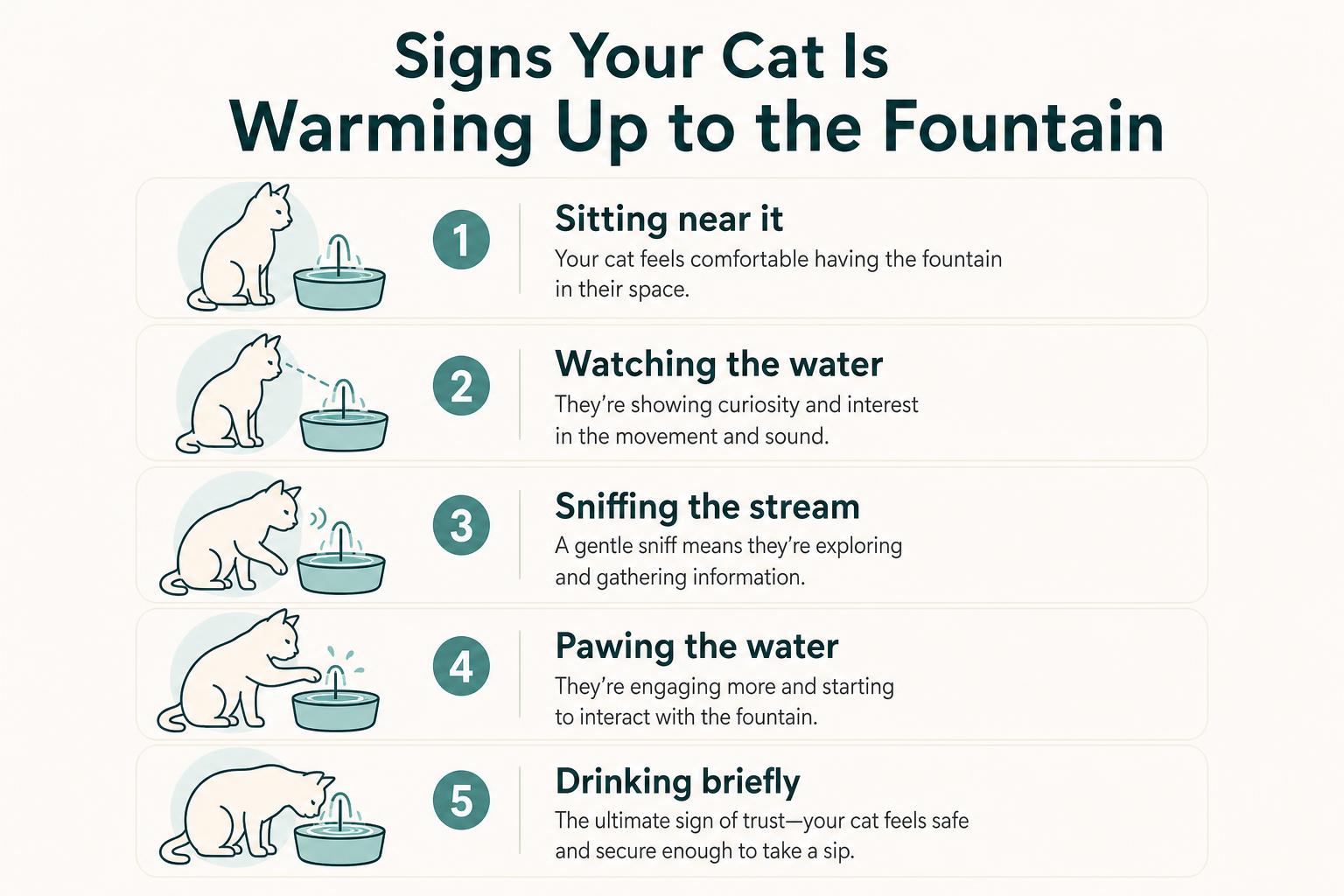
Progress is often gradual. Common early signs include:
- Sitting near the fountain
- Watching the water movement
- Sniffing the stream
- Touching the water with a paw
- Drinking briefly before walking away
Many cats build confidence in small stages rather than suddenly switching overnight. Each of these is a good sign.
What if your cat still won't use the fountain?
Some cats simply prefer bowls.
Despite how popular fountains have become, studies suggest fountains do not increase water intake for every cat. Individual preference still plays a major role.
If your cat continues avoiding the fountain after several weeks:
- Continue offering clean water bowls
- Add additional drinking stations around the home
- Consider wet food for extra hydration
- Try filtered water if taste seems important
- Experiment with another fountain style later
A fountain can be helpful for many cats, but it isn't essential if your cat already drinks well from clean bowls. The most important goal is consistent hydration, not forcing a specific drinking setup.
Curious about why some cats prefer faucets in the first place? Read our companion guides on why cats prefer running water and why your cat is obsessed with the sink.
Frequently asked questions
The questions cat owners ask us most when a new fountain isn't going as smoothly as planned.
Final thoughts
Helping a cat use a water fountain usually comes down to patience, placement, and reducing stress around the new object.
Most cats respond best to
- Quiet fountains
- Gradual introductions
- Calm environments
- Positive reinforcement
- Multiple water options
- Consistent cleaning and maintenance
Some cats adapt immediately. Others need more time before the fountain feels safe and familiar. And in some cases, a cat may simply prefer a traditional bowl instead — that's completely normal too.
The best hydration setup is ultimately the one your cat consistently uses comfortably and confidently.