
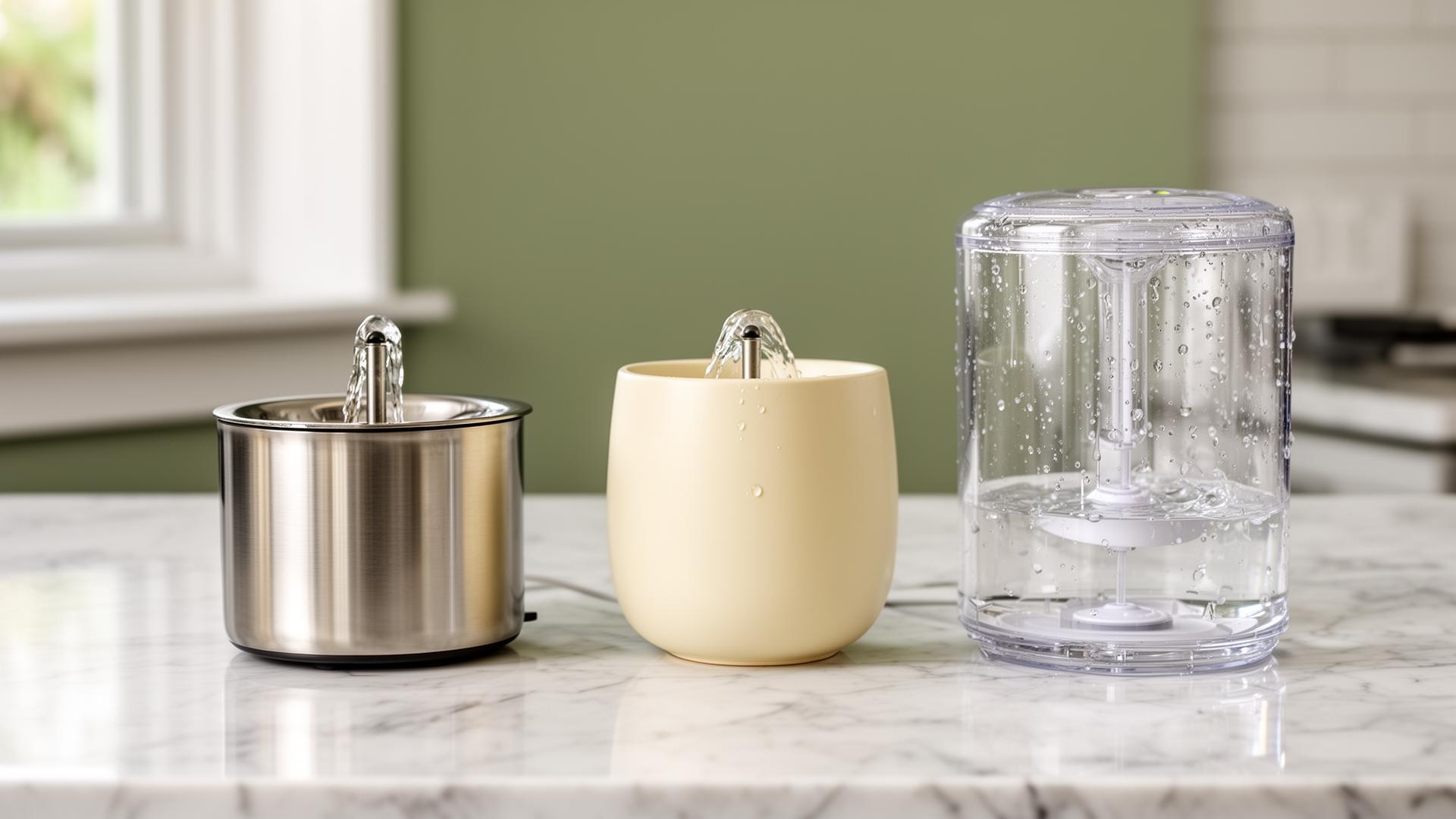
Choosing the right cat water fountain usually starts with design, noise level, or price. But over longer-term use, the material often becomes one of the most important differences.
The safest cat water fountain materials are generally stainless steel and high-quality ceramic. Both resist bacteria better than plastic and are easier to sanitize consistently. Plastic fountains are often cheaper and lighter, but they scratch more easily, can retain odors over time, and typically demand more careful maintenance.
For many cat owners, the decision comes down to balancing hygiene, durability, maintenance convenience, and long-term reliability. This guide breaks down the real-world differences between stainless steel, ceramic, and plastic so you can choose the option that actually fits your cat and your cleaning routine.
Quick comparison: stainless steel vs plastic vs ceramic
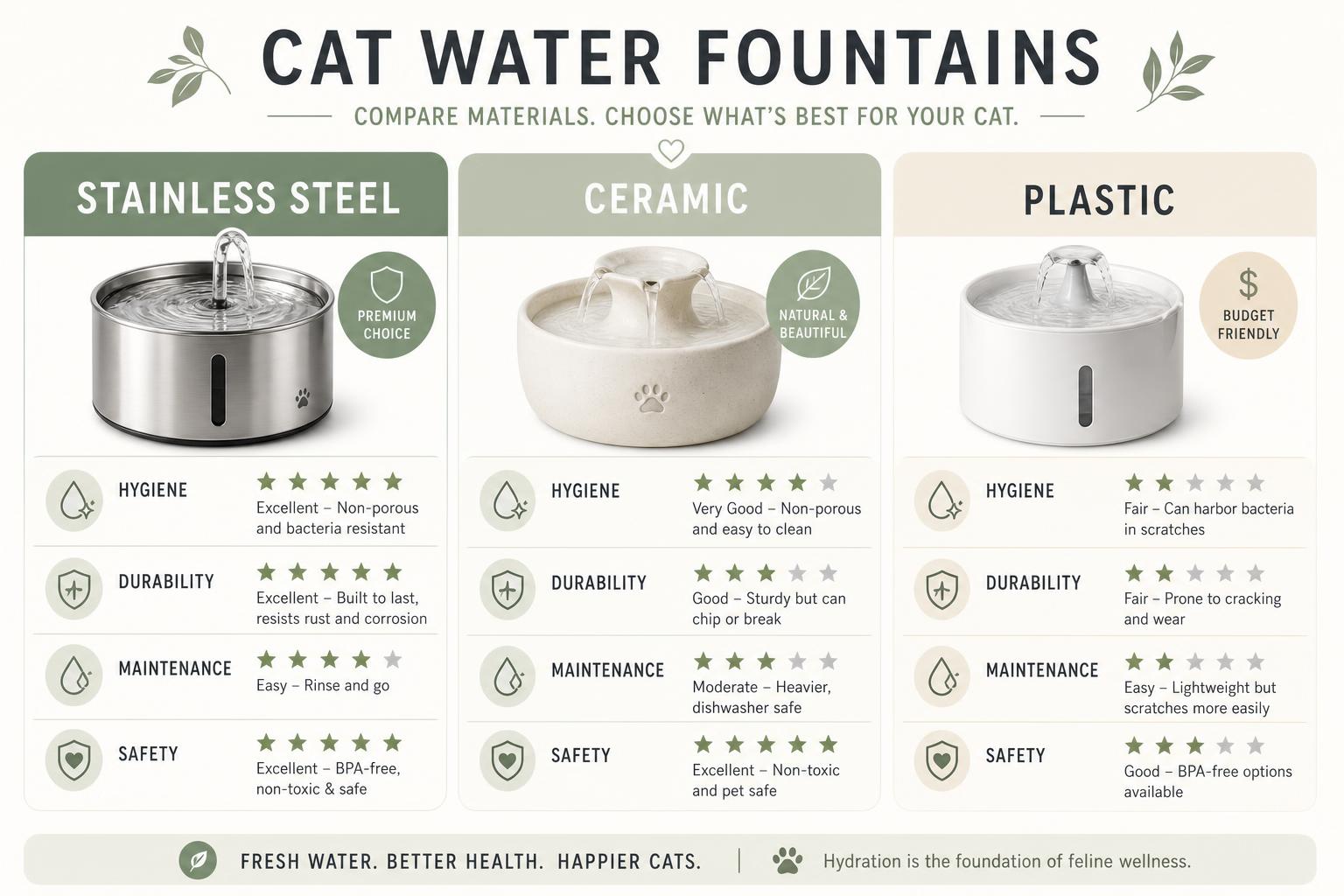
| Material | Main advantage | Main drawback | Best for |
|---|---|---|---|
| Stainless steel | Most hygienic and durable | Higher upfront cost | Long-term use and easy cleaning |
| Ceramic | Heavy, quiet, premium look | Can chip or crack | Owners wanting premium aesthetics and stability |
| Plastic | Affordable and lightweight | Scratches and traps bacteria | Budget-conscious or first-time buyers |
Why fountain material matters for cats
Cats are naturally low-volume drinkers, which means hydration quality matters more than many owners realize. Many cats also develop strong preferences around water freshness, smell, bowl shape, and even the sound of moving water.
During long-term ownership, fountain material can directly affect:
- Water freshness
- Bacterial buildup
- Odor retention
- Cleaning difficulty
- Long-term durability
- Safety if the surface gets scratched or damaged
- Whether picky cats keep using the fountain consistently
One recurring issue with lower-quality fountains: maintenance convenience tends to become more important than the original purchase price after a few months. A fountain that is hard to clean usually ends up cleaned less often — which leads to slime buildup, odors, pump issues, and reduced water appeal.
Cats don't care what your fountain costs. They care whether the water tastes and smells the way it did the day you brought it home.
Stainless steel cat fountains
Why stainless steel is often considered the safest option
Stainless steel cat fountains are widely viewed as the safest overall choice because the material is non-porous, highly durable, and resistant to bacterial buildup. Unlike plastic, stainless steel does not scratch easily under normal use — and that matters because scratches create tiny crevices where biofilm and bacteria can accumulate.
Many veterinarians and feline health resources recommend stainless steel bowls and fountains for this reason. In comparisons discussed across veterinary and consumer research, stainless steel fountains consistently show lower bacterial accumulation than plastic models after identical usage periods.
Stainless steel also doesn't typically absorb odors or flavors. That can matter more than many owners expect, because cats have extremely sensitive senses of smell.
- Non-porous surface resists bacteria
- Easier to sanitize thoroughly
- Dishwasher-safe in many models
- Doesn't absorb odors
- Highly durable and scratch-resistant
- Long lifespan
- Commonly recommended by veterinarians
- Higher upfront cost than plastic
- Many models still use plastic pumps and filter housings
- Lower-quality alloys can corrode — look for 304 food-grade
- Can run slightly louder depending on pump placement
Best fit for
- Multi-cat homes
- Owners prioritizing hygiene
- Cats prone to chin acne
- Long-term fountain use
- Households that want lower maintenance over time
Ceramic cat fountains
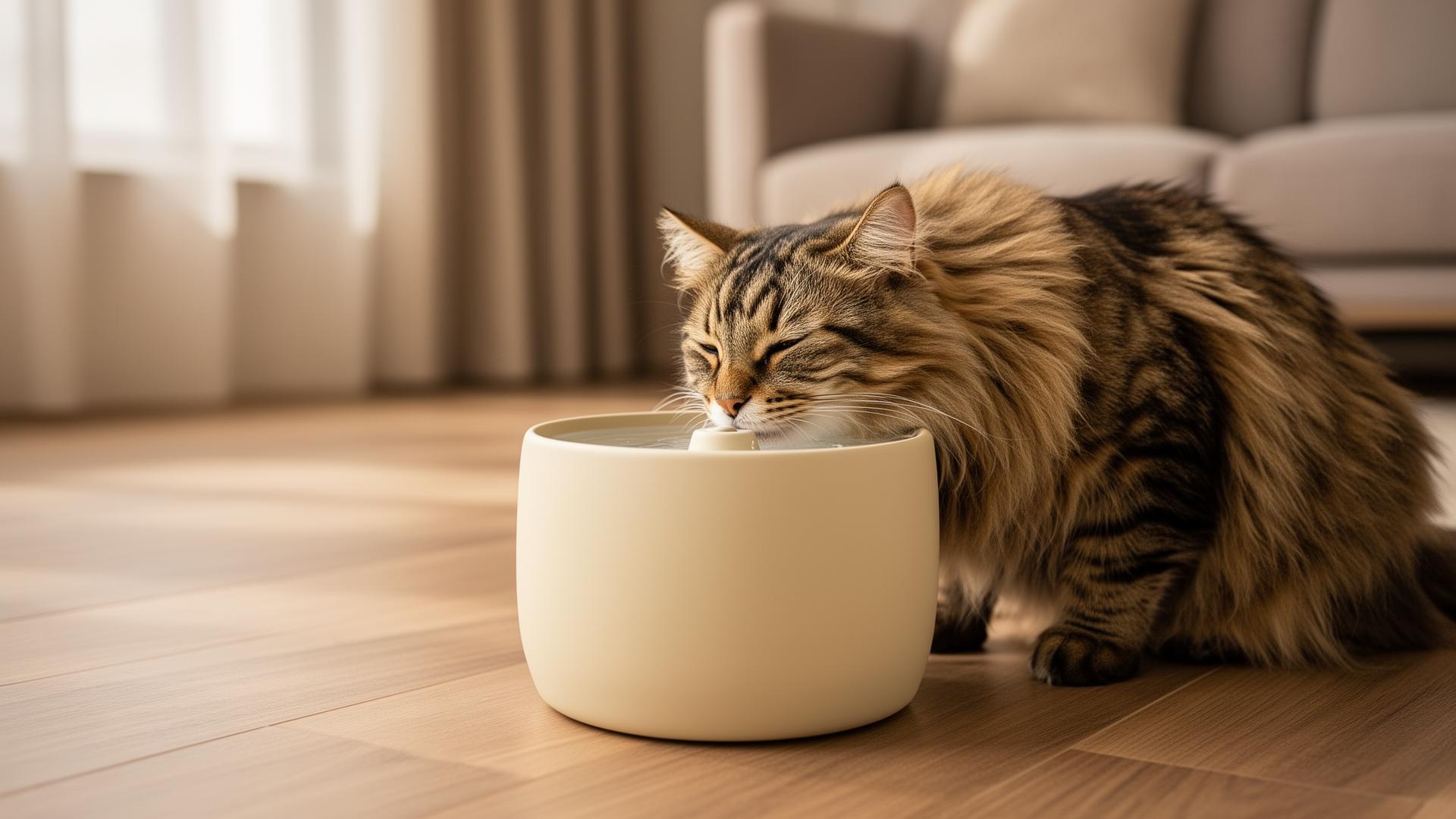
Why many owners like ceramic
Ceramic cat fountains feel premium, stable, and visually cleaner in most home environments. The heavier construction also makes them harder for cats to push or tip over.
Many cats appear comfortable drinking from ceramic surfaces, especially when the glaze stays smooth and intact. High-quality ceramic also tends to stay cooler to the touch than plastic, which some owners feel keeps water tasting fresher for longer.
- Smooth, non-porous surface when properly glazed
- Heavy and stable
- Often quieter due to thicker walls
- Doesn't typically retain odors
- Looks great in modern home décor
- Generally safe when lead-free and food-safe
- Chips and cracks trap bacteria similarly to scratched plastic
- Heavier and more fragile during sink cleaning
- Glaze quality varies wildly by manufacturer
- Any chipped fountain should generally be replaced
What to look for in a ceramic fountain
- Certified food-safe ceramic
- Lead-free glaze
- Reputable manufacturer with clear safety testing
- Smooth, intact, undamaged finish
Best fit for
- Owners wanting a premium aesthetic
- Cats that knock over lightweight fountains
- Quiet home environments where pump noise carries
- People comfortable handling heavier fountains carefully
Plastic cat fountains
Why plastic fountains remain popular
Plastic cat fountains are extremely common because they're inexpensive, lightweight, and widely available. For first-time fountain buyers, plastic models are usually the easiest entry point. Many also include adjustable flow settings and compact designs that fit smaller spaces.
The main drawbacks of plastic
The biggest issue with plastic fountains is long-term hygiene. Plastic scratches very easily. Even careful cleaning with regular sponges eventually creates small abrasions that trap bacteria, slime, and residue.
Over time, owners often notice lingering odors or subtle changes in water smell. That becomes especially important with picky cats who may suddenly avoid a fountain they previously used without complaint.
Material aging is another factor. Although most modern fountains advertise BPA-free plastic, some owners still prefer avoiding plastic altogether for long-term water contact. Plastic fountains also tend to discolor faster and show visible wear sooner than stainless steel.
- Lower upfront cost
- Lightweight and easy to move
- Widely available everywhere
- Largest variety of shapes and styles
- Often quieter when brand new
- Scratches easily
- Harder to sanitize fully
- More likely to retain odors
- Shorter overall lifespan
- Higher long-term wear
- May contribute to chin acne in sensitive cats
Best fit for
- Temporary use
- Budget-focused households
- Testing whether your cat will actually use a fountain
- Owners willing to clean very consistently
Which cat fountain material is most hygienic?
For overall hygiene, stainless steel is usually the strongest option. Its non-porous surface resists scratches, biofilm, and odor retention better than plastic.
Ceramic can also be highly hygienic when the glaze remains intact and undamaged. Plastic generally requires the most maintenance vigilance.
One of the biggest long-term ownership differences is how easily each material stays clean after months of repeated washing. Through repeated maintenance cycles, stainless steel typically holds up better than both ceramic and plastic.
Hygiene ranking
Stainless steel > intact ceramic > new plastic > older scratched plastic. The gap widens with every month of use.
Which material lasts the longest?
Stainless steel usually lasts the longest by a significant margin. A well-made stainless steel fountain can remain usable for years with routine maintenance.
Ceramic can also last a long time if handled carefully, but accidental drops are always a risk. Plastic fountains tend to age fastest through:
- Visible scratches
- Cloudiness
- Odor retention
- Pump housing wear
- Cracking around stress points
Over longer-term use, replacement frequency often makes plastic less economical than it initially looks.
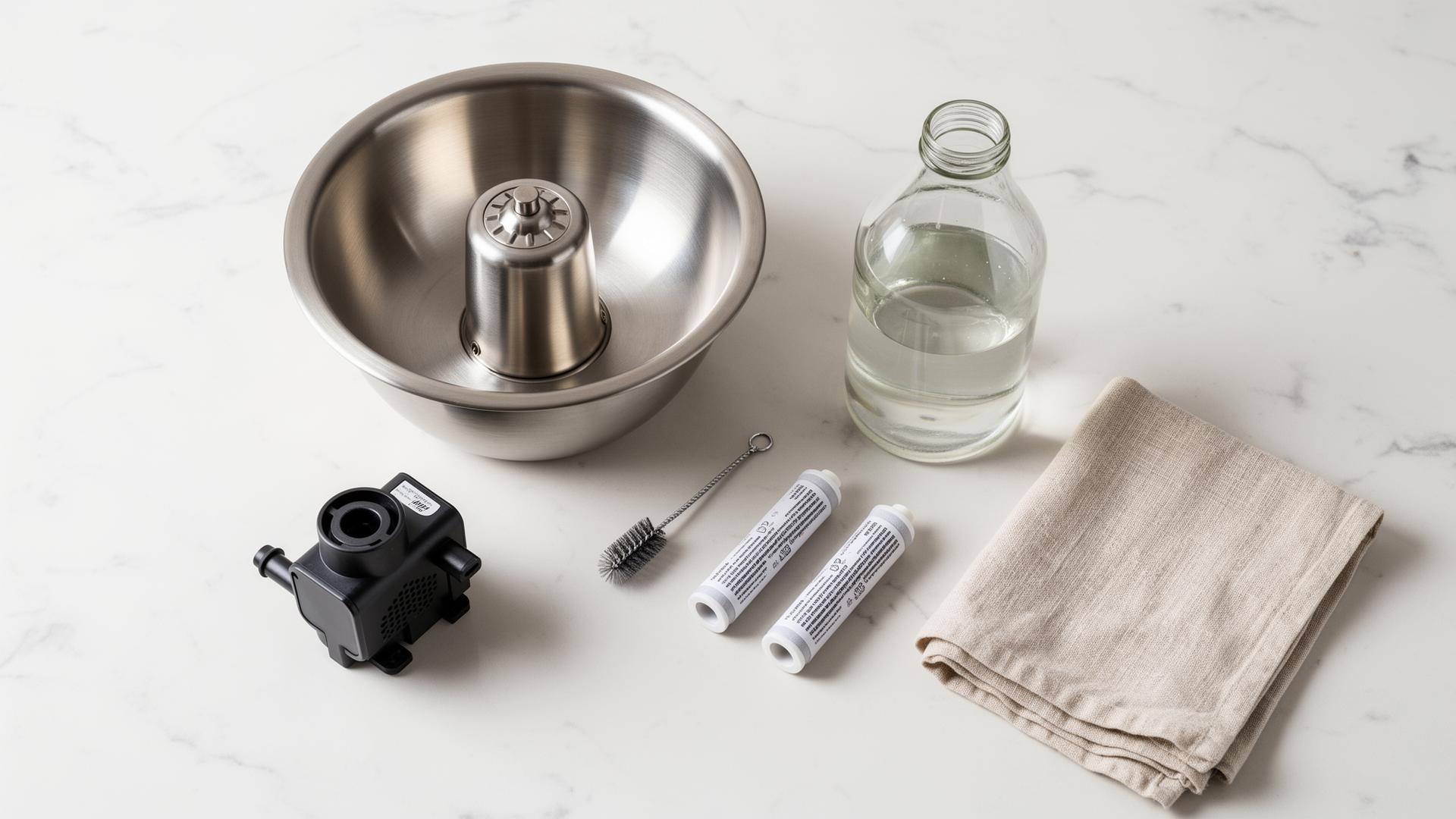
Cleaning and maintenance differences
Stainless steel
Cleaning stainless steel fountains is usually straightforward. Most are dishwasher-safe, and buildup tends to come off easily with warm water and mild soap. Vinegar soaks also work well for mineral deposits.
Ceramic
Ceramic is easy to wipe clean when intact, but inspect regularly for chips or cracks and avoid impacts against the sink. Heavy ceramic reservoirs can also feel less convenient during weekly cleaning.
Plastic
Plastic fountains require the most caution. Abrasive scrubbers can create scratches that worsen bacterial buildup over time. Many owners eventually notice that older plastic fountains become harder to keep looking and smelling fresh — even with careful weekly cleaning.
For a full routine and frequency recommendations, see our cat fountain cleaning schedule guide.
Do cats prefer stainless steel, ceramic, or plastic?
Cats vary significantly in their preferences. Some care more about water movement and noise level than the material itself. Others appear highly sensitive to odors, residue, or basin shape.
In real-world ownership, many people notice that cats reluctant to drink from older plastic fountains start using stainless steel fountains more consistently. Whisker comfort matters too — wide drinking areas and open basin designs tend to encourage better usage regardless of material.
Related reading: why cats prefer running water and how to get a cat to use a water fountain.
Are stainless steel cat fountains worth the higher price?
For many households, yes. The higher upfront cost is usually balanced by:
- Better durability
- Easier cleaning
- Lower bacterial buildup
- Longer lifespan
- Reduced odor issues
- Better long-term appearance
For owners already committed to using a fountain daily, stainless steel is usually the most practical long-term investment.
Final verdict: which cat fountain material is best?
For most cat owners, stainless steel offers the best balance of hygiene, durability, safety, and long-term maintenance convenience.
Ceramic is also an excellent option when purchased from a reputable manufacturer and kept in good condition.
Plastic fountains can still work well short term, but they generally demand more careful maintenance and earlier replacement.
If your priority is the safest cat water fountain material overall, stainless steel remains the strongest all-around choice.
That said, the best fountain is ultimately the one your cat consistently drinks from and that you can realistically keep clean every week. A well-maintained fountain of any material is almost always better than stale water sitting untouched in a bowl.
Frequently asked questions
The most common questions cat owners ask before choosing between stainless steel, ceramic, and plastic fountains.
Stainless steel is generally considered the safest because it's non-porous, resists bacteria, doesn't retain odors, and lasts longer than plastic. Ceramic is also very safe when it uses a lead-free, food-safe glaze and the surface stays free of chips or cracks.