
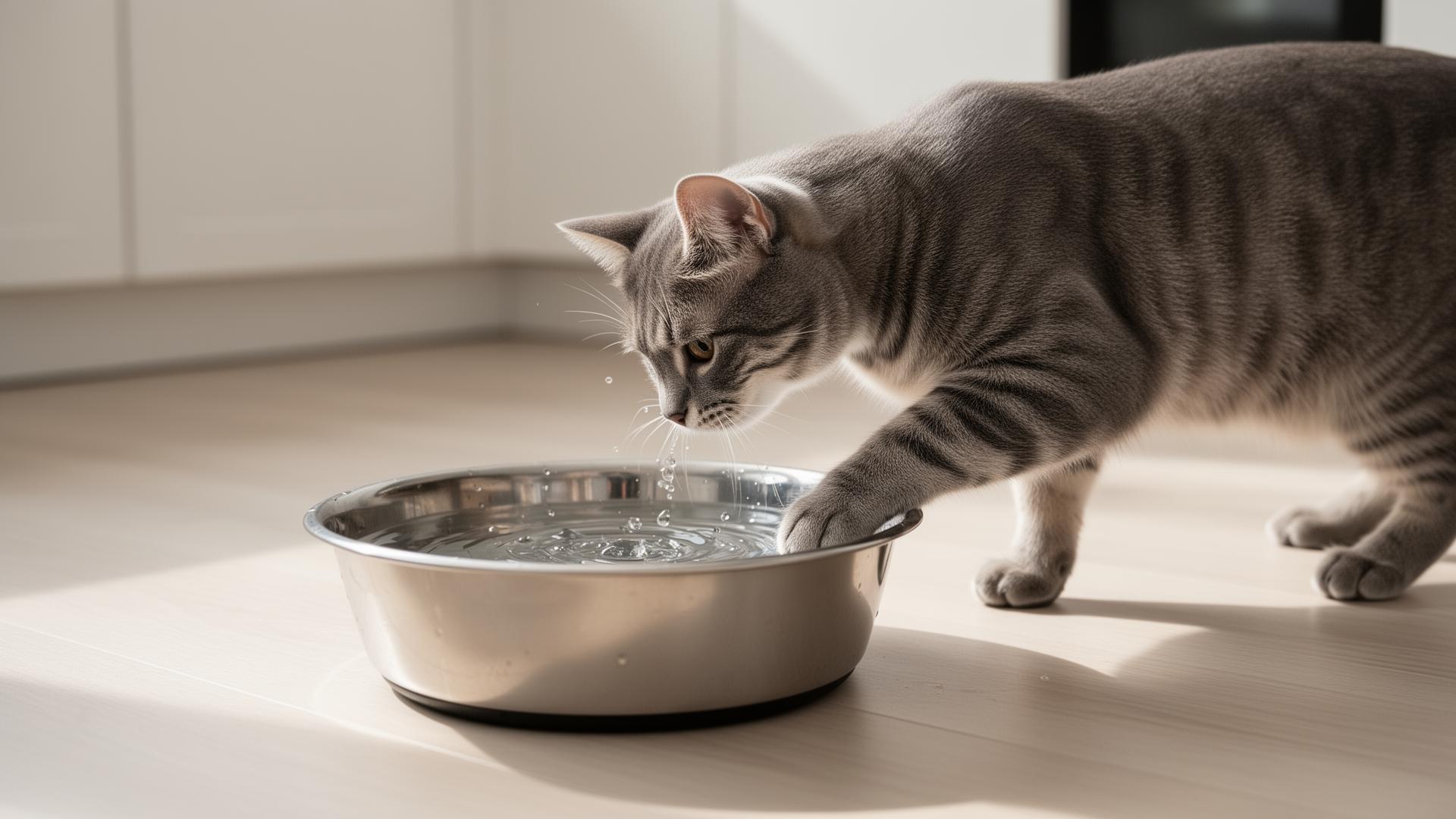
If your cat paws at the water bowl before drinking, splashes water onto the floor, or seems to play in the dish, you're not alone. Many owners notice this and wonder whether it's normal, playful, or a sign something is wrong.
In most cases, cats paw at water because of instinct, sensory preferences, or curiosity. Some are testing the water level. Others simply prefer moving water over still. Bowl shape, whisker sensitivity, stress, and hydration habits can all play a role too.
The good news: occasional pawing or splashing is usually harmless. Understanding why it happens just helps you build a more comfortable drinking setup — and a little less mess on the floor.
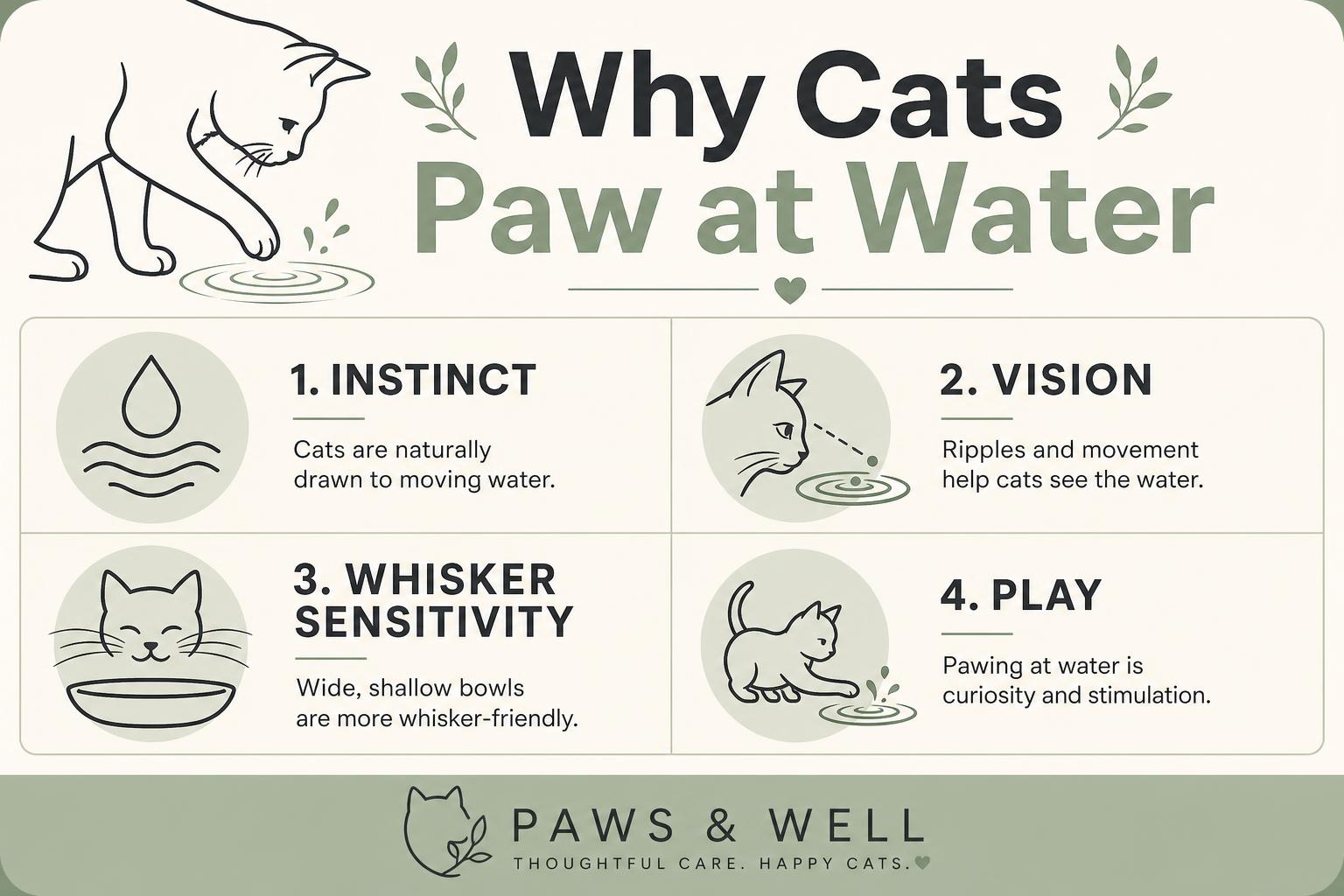
Cats naturally prefer moving water
One of the most common reasons cats splash or paw at water is pure instinct.
Wild cats historically avoided stagnant water whenever possible because standing water was more likely to carry bacteria or contamination. Moving water from streams or rivers was generally safer. Indoor cats still carry some of those instincts today.
When a cat taps the surface with a paw, it creates ripples and movement. That movement helps the water feel fresher and easier to detect. In observation-based behavior research, many cats appeared more interested in water once movement was introduced — which is one of the main reasons fountains tend to succeed with picky drinkers.
Some cats will:
- Swat the surface repeatedly
- Dip a paw and lick the water off
- Splash until the water moves
- Prefer faucets or fountains over bowls
Not every cat does this, but it's extremely common.
Related reading: why cats prefer running water.
Cats may have trouble seeing still water
Cats don't see the world the same way humans do.
A still, reflective water surface can actually be hard for them to judge, especially in low light. Cats also have a small blind spot directly beneath the nose, which makes bowl depth tricky to assess. Pawing the water creates ripples and reflections that help them locate the surface more accurately.
This is especially common with:
- Clear water in reflective bowls
- Low lighting
- Deep bowls
- Glass or shiny stainless steel dishes
Many owners describe the same pattern: the cat hesitates briefly, taps the water once or twice, then drinks normally. That quick paw tap is often just a sensory check.
Most of the time, that paw isn't playing — it's a question. Where exactly is the surface?
Whisker sensitivity can make bowls uncomfortable
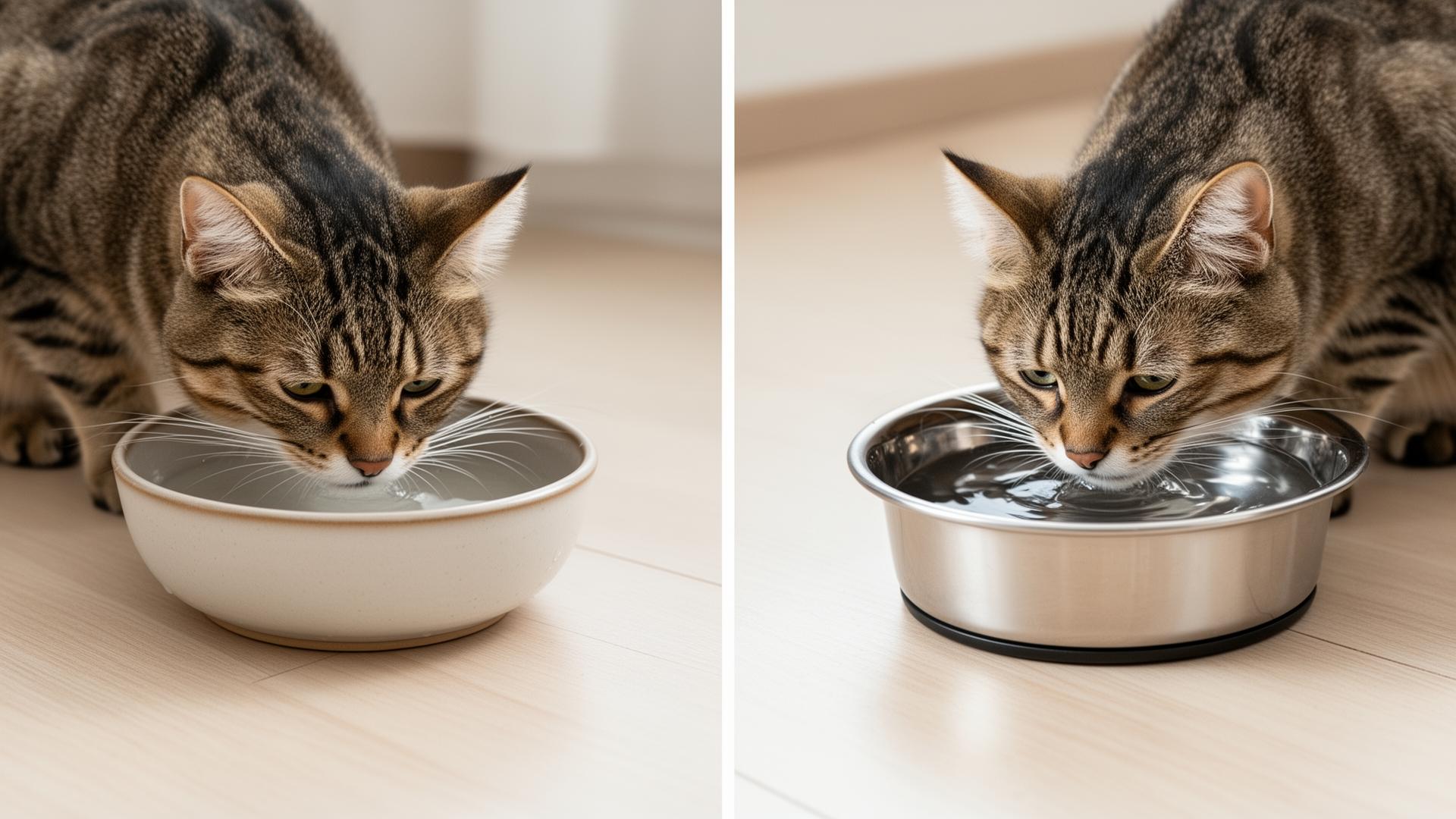
Whiskers are extremely sensitive sensory tools.
Some cats dislike having their whiskers constantly brush the sides of a narrow or deep water bowl. While "whisker fatigue" is still debated scientifically, many cats clearly prefer wider, shallower dishes. Instead of pushing their face into the bowl, they use a paw to scoop or test the water.
This is especially common with:
- Small bowls
- Deep bowls
- Narrow ceramic dishes
- Plastic bowls with high sides
Switching to a wide stainless steel or shallow ceramic bowl often reduces pawing noticeably. Over the long run, bowl design becomes one of the biggest factors influencing both drinking habits and the amount of mess around the water area.
Some cats simply enjoy playing with water
For some cats, water movement is entertaining.
Kittens and highly curious cats often treat water like a toy. Ripples, reflections, droplets, and splashes provide mental stimulation in the same way a moving string or dangling object does. That playful behavior may include:
- Splashing repeatedly
- Dipping toys into the bowl
- Batting at reflections
- Pawing water before every drink
Certain breeds and personalities also seem more fascinated by water than others. In many cases, playful splashing decreases with age — though some adult cats happily keep doing it for years.
Stress or environmental factors can contribute
Drinking location matters more to cats than many owners realize.
Cats prefer drinking in calm, open spaces where they feel safe and aware of their surroundings. If a bowl is tucked into a tight corner or sits beside loud appliances, some cats become hesitant or develop unusual drinking behaviors.
Multi-cat households can also create tension around shared water sources.
In homes with multiple cats, more timid ones sometimes paw or hover around the bowl instead of drinking comfortably when another cat is nearby. Helpful adjustments include:
- Multiple water stations
- Quiet drinking areas
- Elevated bowls
- Separating food and water locations
- Larger bowls with open visibility
These changes often improve overall drinking comfort.
Why cats sometimes drink with their paw
Some cats dip a paw into the bowl and lick the water from their fur instead of lapping directly. This usually happens because:
- They dislike whisker contact
- They prefer testing water depth first
- They feel more comfortable drinking indirectly
- They learned the behavior early in life
It looks unusual, but it's generally harmless — as long as overall hydration stays adequate.
Could my cat be trying to tell me something?
Usually, pawing at water is normal. Sudden or excessive changes in water behavior are different.
Increased thirst combined with obsessive splashing or unusual drinking patterns can occasionally point to medical issues such as:
- Kidney disease
- Diabetes
- Urinary tract issues
- Dehydration
Watch for additional signs like:
- Frequent urination
- Weight loss
- Vomiting
- Lethargy
- Appetite changes
When to call the vet: if water behavior changes suddenly, intensifies dramatically, or shows up alongside any of the symptoms above, a veterinary visit is the safest next step.
How to reduce water pawing and splashing
You usually can't eliminate the behavior completely, but you can often reduce it significantly.
Use a wider bowl
Wide, shallow bowls help reduce whisker contact and make water easier to access comfortably. Stainless steel and ceramic are typically easier to keep clean over time than plastic.
See our deep dive on stainless steel vs ceramic vs plastic for material trade-offs.
Try a cat water fountain
Many cats strongly prefer moving water. Over the long run, fountains often reduce pawing because the water is already circulating and visually active — and they tend to encourage better hydration overall.
That said, maintenance matters. Some fountains become noisy or hard to clean if neglected, so simplicity and easy cleaning are worth prioritizing.
Keep water fresh
Cats are surprisingly sensitive to stale water. Refreshing bowls daily and cleaning buildup regularly can make water more appealing — and reduce investigative pawing.
Separate food and water
Many cats instinctively prefer drinking away from food areas. Moving the water bowl a few feet away sometimes improves drinking behavior almost immediately.
Add multiple water stations
This is especially helpful in:
- Multi-cat homes
- Larger houses
- Homes with older cats
Multiple quiet drinking areas reduce competition and encourage more consistent hydration.
When pawing is completely normal
In most healthy cats, occasional pawing, splashing, or tapping is simply part of how they interact with water. Some cats do it for sensory reasons. Some do it for comfort. Some do it because it's fun.
As long as your cat is hydrated, behaving normally, and not showing signs of illness, there's usually no reason for concern. Understanding the behavior just helps you build a setup that feels safer, cleaner, and more comfortable long term.
- Tapping the surface once or twice before drinking
- Occasional splashing during play
- Dipping a paw and licking it
- Preferring fountains or running taps
- Sudden obsession with water
- Big increase in overall thirst
- Frequent urination or litter-box changes
- Vomiting, weight loss, or lethargy
Frequently asked questions
The questions cat owners ask most often about pawing, splashing, and playing with water.
Cats often paw at water to create movement, test water depth, or help locate the water surface visually. It's usually instinctive and harmless, and many cats simply find moving water easier to see and more appealing to drink.